Xiaomi TV Box S (3rd Gen) product image viewing setup
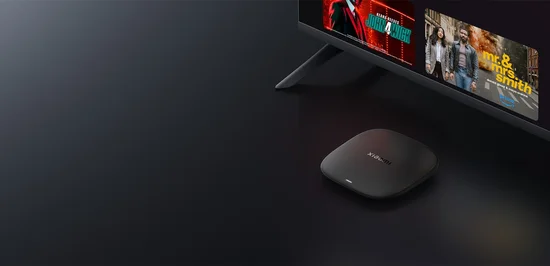
The photograph identifies Xiaomi TV Box S (3rd Gen) product image. Match the full product name and the device that runs the app before choosing an installer.
Recognize the hardware
Xiaomi’s UK specifications identify the third-generation TV Box S with Google TV, 2 GB of RAM and 32 GB of storage. Its HDMI 2.1 and USB 2.0 connections help distinguish this unit from earlier black boxes with similar names. Use the 32 GB third-generation specification and Google TV interface to distinguish this box from the original 8 GB Mi Box S.
To check the player on Xiaomi TV Box S (3rd Gen) product image, begin at the profile or Settings menu, followed by System and About where offered. Google TV describes the interface. The company and model on the television or streaming box still determine which releases it can run. A built-in television can be set up in basic mode, which leaves the tuner and inputs usable while limiting app installation. Record the installed version while the screen is in front of you. A shop description can name the product family without telling you what software this particular unit runs.
Where should a third-generation owner look for a player?
Use Apps on the Google TV interface actually installed on this box. Check the developer and full player title. If an older Mi Box S guide offers Android 8.1 as the identifying specification, go back to the generation printed on this product. See whether the remote can bring up programme information while a channel is playing. Compare the menu that opens on a short press with the Home screen. One belongs to the player, the other belongs to the device.
If the app opens but its guide omits the expected region, confirm the chosen player profile and station edition. Leave the box’s display resolution unchanged during that check. The UK product sheet identifies hardware specifications rather than a particular regional channel lineup. Keep the outcome with the device name, Xiaomi TV Box S (3rd Gen) product image. If a message appears, write down its wording and the action immediately before it. Someone reading that description can repeat the same step without guessing whether the failure happened at the store, in the player or during playback.
Find the correct installation route
For Xiaomi TV Box S (3rd Gen) product image, the first distribution check concerns Google TV Apps. From the Google TV Home screen, use Apps or search for the particular player. Choose the result whose listing names the intended publisher. A show or film result can send you straight to entertainment without ever opening a player listing. Before accepting a purchase, read the name of the organization charging for it. An application licence, an optional upgrade and a viewing account can have different issuers even when all three appear during one setup.
When Xiaomi TV Box S (3rd Gen) product image reaches the account screen, record the labels before asking for a trial. The Google account attached to the TV controls its Google services. Open the installed player separately. If it asks for a server or playlist, use the information supplied for that particular viewing service and leave the TV’s Google account undisturbed. If the approved player opens with an existing profile, leave it available until you have identified the profile used for the test. A new installation can remove the most helpful point of comparison.
Compare the next device in the room
A useful comparison here is Xiaomi Mi Box S. The global specification for this original Mi Box S lists Android 8.1, 2 GB of RAM, 8 GB of storage and HDMI 2.0a. Xiaomi now also uses the TV Box S name for later generations. Read the generation on the underside or packaging and check the software page on the box. The original global specification is a starting point for identification. Compare the release installed today with the player’s current listing on the box.
The observation to carry over from the comparison is specific to Xiaomi TV Box S (3rd Gen) product image. Write down the Google TV hardware model as well as the app name. A store search carried out on a phone is a different test. If the two devices behave differently, record the service you selected, the displayed local time and which player opened it. A new app, a new network and a new account in the same attempt leave several possible explanations.
When the first attempt stalls
An installation question about Xiaomi TV Box S (3rd Gen) product image can begin with the last screen that worked. If the Apps area is absent on a television using basic mode, check the Google TV setup offer on the built-in Home screen. A separate HDMI streamer has its own interface, so switching the TV to another input can change which store appears. Describe the change you made once, then try the same action again. Keep an existing working connection or account intact while checking the one that fails.
A concise message can include “Where should a third-generation owner look for a player?” followed by the model, system version, player title and what you saw. Give the first result from the test above as well. Those details are enough to start a conversation without sending a password, a private playlist or a photograph of someone else’s account.
Identify the hardware
| Detail | What to match |
|---|---|
| Product pictured | Xiaomi TV Box S (3rd Gen) product image |
| Device family | Android TV |
| Other catalogue labels | Xiaomi, TV Box S (3rd Gen), Xiaomi TV Box S |
Choose the player
Search the device’s Play Store. Confirm that the app appears for the TV and that the listing matches the publisher. Open it once and identify the account fields.
Open the Android TV guideQuestions and answers
Where should a third-generation owner look for a player? (Xiaomi TV Box S (3rd Gen) product image)
Use Apps on the Google TV interface actually installed on this box. Check the developer and full player title. If an older Mi Box S guide offers Android 8.1 as the identifying specification, go back to the generation printed on this product.
Illustrated guides