
Tour de France Femmes viewing guide
Use Femmes and the edition to find the women's stage race. A town used by both men's and women's races might supply very similar images from separate dates.
Tour de France Femmes competition identity. Original logo record.

Fourth on the stage, first in the Tour
Kasia Niewiadoma finished fourth on Alpe d’Huez on the final day of the 2024 Tour de France Femmes and still won the race overall. Demi Vollering took the stage. Pauliena Rooijakkers crossed four seconds after her, while Évita Muzic and Niewiadoma both finished one minute and one second behind the stage winner. When the earlier stages were included, Niewiadoma retained the yellow jersey by four seconds. The same four-second figure describes two quite different gaps in the organizer’s report.
To watch the race for yellow unfold, stay with the coverage after Vollering crosses the line. The decisive question is how much time elapses before Niewiadoma arrives. A short stage-winner clip can end before the answer becomes visible. If you are writing down the results, give the Alpe d’Huez stage to Vollering and the general classification to Niewiadoma. Put the one-minute-one-second time beside Niewiadoma’s stage result and the four-second margin beside her overall victory.
Tour de France Femmes · 2024 Alpe d’Huez finishFrom the competition archive
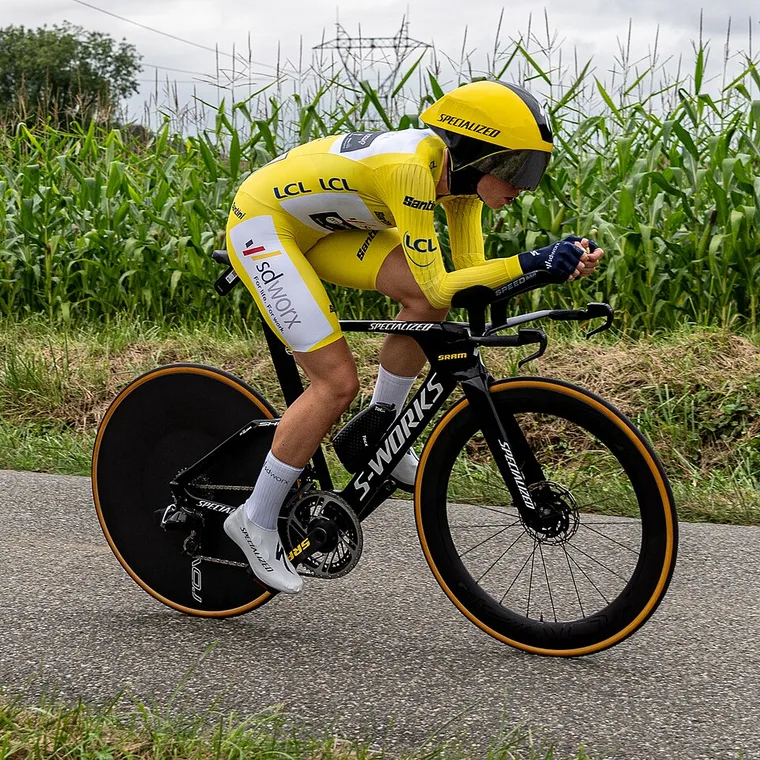

Which women's Tour stage?
Use Femmes and the edition to find the women's stage race. A town used by both men's and women's races might supply very similar images from separate dates.
For Tour de France Femmes, keep the discipline, stage or circuit, and rider category on the same line when saving a fixture. A one-day classic, a stage win and a general classification lead produce different results. Use the route and the distance remaining to identify a breakaway. For a track meeting, use the discipline and qualifying or medal round instead of a road-race location.
Reading the programme and the archive
For an old Tour de France Femmes broadcast, the opening graphic is often more informative than a modern upload title. Capture the season, participants and visible venue name. Use the competition background to place those details in context, then compare them with the results from the edition itself. A tribute, anniversary programme or compilation may deliberately mix action from several years.
Tour de France Femmes schedules can attach more than one time to the same programme. The organizer can give a neutralized start, a racing start and a finish estimate. A television transmission often joins an event already in progress. A velodrome session, by contrast, can schedule many short races within one programme.
What a host-city time means at home
Consider a clock example for a viewer following Tour de France Femmes. Imagine that a programme lists 19:30 in Paris on 12 December 2026. That reads 13:30 on 12 December in Toronto and 03:30 on 13 December in Tokyo. The example is a time conversion. A real fixture still needs its own published start and host city.
Using the same 19:30 in Paris on 12 June 2027 gives 13:30 on 12 June in Toronto and 02:30 on 13 June in Tokyo. Compare those two dates before carrying a time difference into another Tour de France Femmes round. If the scheduling app already displays your local time, save the entry as shown. Converting it again is how an otherwise correct reminder ends up an hour or a whole day out.
Who carries the event in your market?
Begin with the organizer’s event page for Tour de France Femmes and choose the event, edition or fixture. Follow a “where to watch” link for the country in which the screen will be used. In the local broadcaster’s own guide, match the event details with the network or streaming service and the start of coverage. A worldwide organizer feed and a domestic broadcaster may use different names for the same programme.
Finding the part you came for
For an archive search under Tour de France Femmes, start with the official results before typing a long description of a moment. An attack on a climb and a rider crossing the finish line are different moments. Check the race distance, category and result. In a stage race keep the stage result separate from the overall standings that followed it.
Competition picture desk
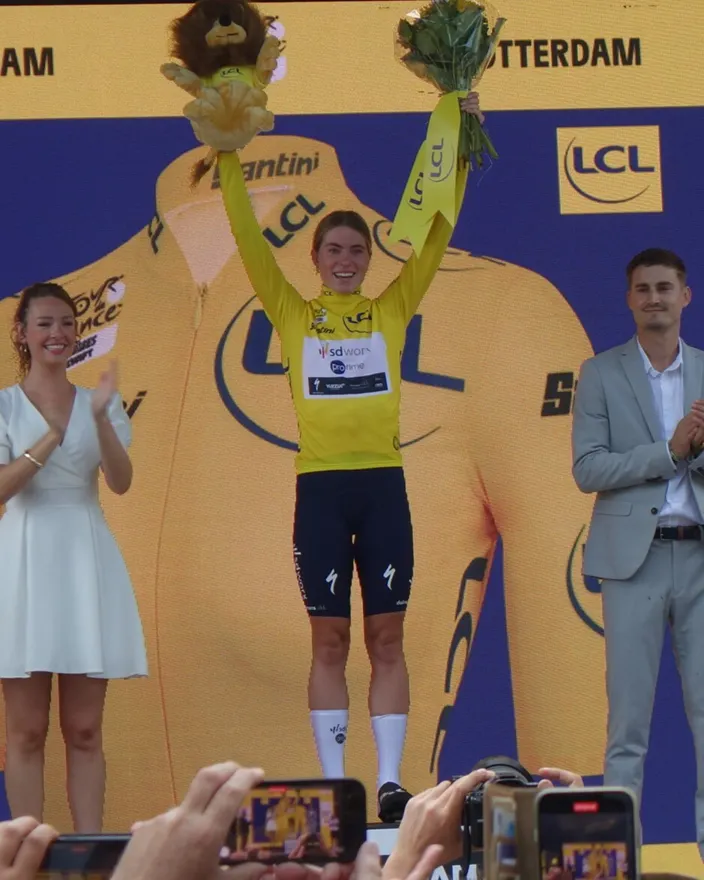

One documented edition
A dated example is 2024 Tour de France Femmes. The published date or season is 12–18 August. Its entry for stages reads 8. Use those details when comparing a film of Tour de France Femmes with an organizer’s newer season page. An upload date can be years after the competition, while the venue or edition on the original graphic ties the footage to its sporting record.
Names in team records
The Tour de France Femmes reference table pairs year, rider and team. Its entries include “2022 · Annemiek van Vleuten (NED) · Movistar Team”, “2023 · Demi Vollering (NED) · SD Worx” and “2025 · Pauline Ferrand-Prévot (FRA) · Visma–Lease a Bike”. Read the team name in the context of the listed season. League membership, club names and divisional labels can change. A current team page can be useful for spelling without establishing the level at which an older event was played.
| Year | Rider | Team |
|---|---|---|
| 2022 | Annemiek van Vleuten (NED) | Movistar Team |
| 2023 | Demi Vollering (NED) | SD Worx |
| 2025 | Pauline Ferrand-Prévot (FRA) | Visma–Lease a Bike |
| 2026 | Demi Vollering (NED) | FDJ United–Suez |
How the field is described
The Tour de France Femmes reference table pairs name, country and years. Its entries include “Marianne Vos · Netherlands · 2022, 2025”, “Demi Vollering · Netherlands · 2023, 2024, 2026” and “Charlotte Kool · Netherlands · 2024”. A country, confederation or region can identify where an entrant qualified, the association it represented or where an event took place. Read the actual column headings before using a country as a clue to a viewing territory.
| Name | Country | Years |
|---|---|---|
| Marianne Vos | Netherlands | 2022, 2025 |
| Demi Vollering | Netherlands | 2023, 2024, 2026 |
| Charlotte Kool | Netherlands | 2024 |
| Pauline Ferrand-Prévot | France | 2025 |
Competition records and edition names
For an edition search, the competition profile for Tour de France Femmes records region (France). Those are useful identifiers when an old television caption uses a different name or a translation. For a specific fixture, resolve the actual season first. Club membership, rules and venues in a general profile can reflect a later edition than the game in the archive.
Two entries in the reference tables associated with Tour de France Femmes illustrate the level of detail available. One records year 2022, rider Annemiek van Vleuten (NED), team Movistar Team. The other records year 2023, rider Demi Vollering (NED), team SD Worx. Read these as entries from the competition’s background tables. A new fixture needs its own announcement. A source result, unlike a recycled highlights title, preserves the names or places used for that particular record.
Questions and answers
Which schedule details identify Tour de France Femmes?
Use Femmes and the edition to find the women's stage race. A town used by both men's and women's races might supply very similar images from separate dates.