
Rolex 24 at Daytona viewing guide
The 24-hour race uses Daytona's road course. Start, overnight and finish footage can fall on separate local dates. Record the class, car number and elapsed race hour when tracing an incident.
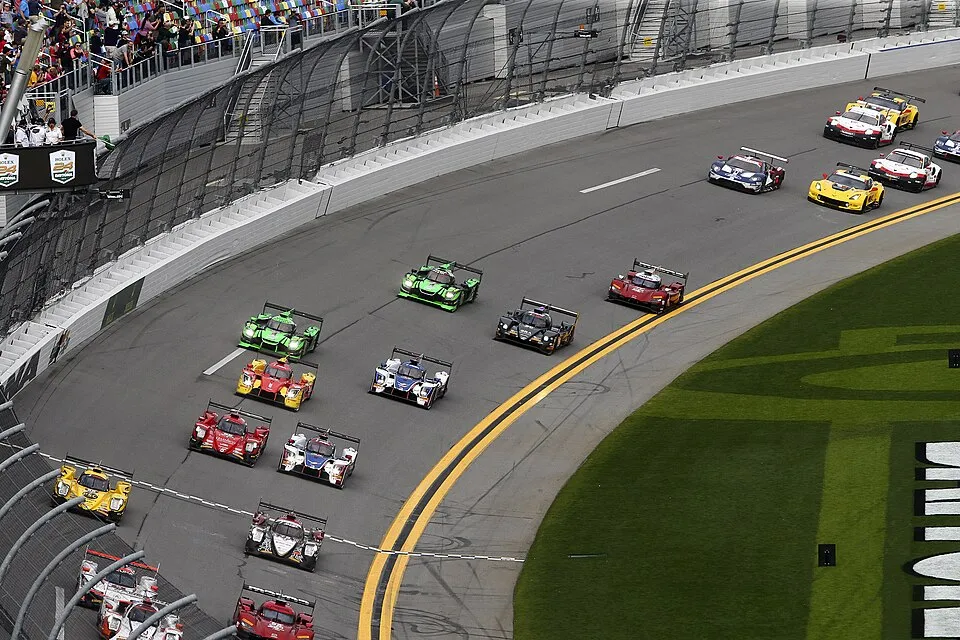

An endurance event lasting two days
The 24-hour race uses Daytona's road course. Start, overnight and finish footage can fall on separate local dates. Record the class, car number and elapsed race hour when tracing an incident.
For Rolex 24 at Daytona, keep the series, circuit, session and class where applicable on the same line when saving a fixture. Start with the circuit and session. A meeting can appear under a city, a circuit sponsor or a championship round number. Practice, qualifying and the race are distinct entries. For a multiclass grid, a class result and the overall classification answer different questions about the same finish.
From the competition archive
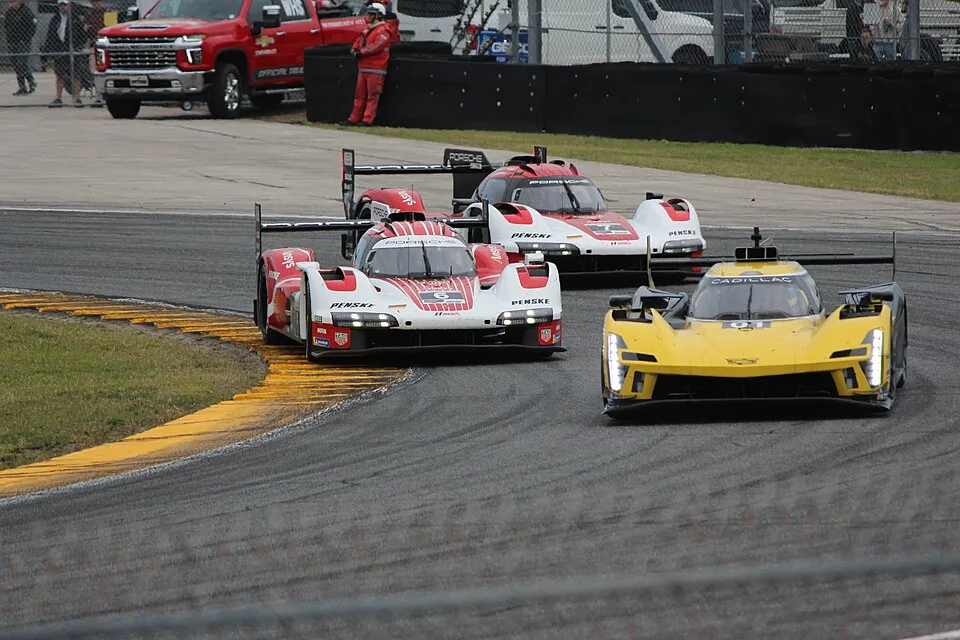

Reading the programme and the archive
The background record for Rolex 24 at Daytona adds context to a programme listing. Among its identifying details are venue — Daytona International Speedway. Take the edition year from the actual results when looking for archive footage. A present-day description can name a venue, format or governing body that was different when the footage was recorded. Compare the title on screen with the description in the competition background.
Rolex 24 at Daytona schedules can attach more than one time to the same programme. The venue timetable may list a pit-lane opening, a formation lap or the start of timed competition. A broadcaster can add a grid walk before any of them. Save the organizer’s session name with the time so a search for the round does not land on an earlier session.
What a host-city time means at home
Consider a clock example for a viewer following Rolex 24 at Daytona. Imagine that a programme lists 19:30 in Daytona Beach on 12 December 2026. That reads 00:30 on 13 December in London and 09:30 on 13 December in Tokyo. The example is a time conversion. A real fixture still needs its own published start and host city.
Using the same 19:30 in Daytona Beach on 12 June 2027 gives 00:30 on 13 June in London and 08:30 on 13 June in Tokyo. Compare those two dates before carrying a time difference into another Rolex 24 at Daytona round. If the scheduling app already displays your local time, save the entry as shown. Converting it again is how an otherwise correct reminder ends up an hour or a whole day out.
Who carries the event in your market?
Begin with the organizer’s event page for Rolex 24 at Daytona and choose the event, edition or fixture. Follow a “where to watch” link for the country in which the screen will be used. In the local broadcaster’s own guide, match the event details with the network or streaming service and the start of coverage. A worldwide organizer feed and a domestic broadcaster may use different names for the same programme.
Finding the part you came for
For an archive search under Rolex 24 at Daytona, start with the official results before typing a long description of a moment. A race summary, a full world-feed replay and an onboard camera can show different parts of the same incident. Look for the lap or elapsed race time on the official timing sheet. Circuit names can survive changes in layout, so include the season.
Competition picture desk

Reading the competition tables
The Rolex 24 at Daytona reference table pairs driver and years. Its entries include “Hurley Haywood · 1973, 1975, 1977, 1979, 1991”, “Pedro Rodríguez · 1963, 1964, 1970, 1971” and “Brian Redman · 1970, 1976, 1981”. Different reference tables can track editions, events, people or organizations. The headings preserve that distinction. Copying a name into a search without its category can make a season summary look like a result from one specific meeting.
| Driver | Years |
|---|---|
| Hurley Haywood | 1973, 1975, 1977, 1979, 1991 |
| Pedro Rodríguez | 1963, 1964, 1970, 1971 |
| Brian Redman | 1970, 1976, 1981 |
| Ken Miles | 1965, 1966 |
How the field is described
The Rolex 24 at Daytona reference table pairs year, date, team, distance and championship. Its entries include “1962 · February 11 · Frank Arciero · 312.420 mi (502.791 km) · International Championship for GT Manufacturers”, “1963 · February 17 · North American Racing Team · 307.300 mi (494.551 km) · International Championship for GT Manufacturers” and “2025 · January 25 January 26 · Porsche Penske Motorsport · 2,780.72 mi (4,475.14 km) · IMSA SportsCar Championship”. A country, confederation or region can identify where an entrant qualified, the association it represented or where an event took place. Read the actual column headings before using a country as a clue to a viewing territory.
| Year | Date | Team | Distance | Championship |
|---|---|---|---|---|
| 1962 | February 11 | Frank Arciero | 312.420 mi (502.791 km) | International Championship for GT Manufacturers |
| 1963 | February 17 | North American Racing Team | 307.300 mi (494.551 km) | International Championship for GT Manufacturers |
| 2025 | January 25 January 26 | Porsche Penske Motorsport | 2,780.72 mi (4,475.14 km) | IMSA SportsCar Championship |
| 2026 | January 24 January 25 | Porsche Penske Motorsport | 2,509.8 mi (4,039.1 km) | IMSA SportsCar Championship |
Competition records and edition names
Two entries in the reference tables associated with Rolex 24 at Daytona illustrate the level of detail available. One records year 1962, team Frank Arciero, distance 312.420 mi (502.791 km). The other records year 1963, team North American Racing Team, distance 307.300 mi (494.551 km). Read these as entries from the competition’s background tables. A new fixture needs its own announcement. A source result, unlike a recycled highlights title, preserves the names or places used for that particular record.
Questions and answers
Which schedule details identify Rolex 24 at Daytona?
The 24-hour race uses Daytona's road course. Start, overnight and finish footage can fall on separate local dates. Record the class, car number and elapsed race hour when tracing an incident.