
Peruvian Liga 1 viewing guide
Liga 1 refers here to Peru's football top flight. Use Peru and the season phase, particularly when an international results search returns an identically styled league name from another country.
Peruvian Liga 1 competition identity. Original logo record.

Which Liga 1?
Liga 1 refers here to Peru's football top flight. Use Peru and the season phase, particularly when an international results search returns an identically styled league name from another country.
For Peruvian Liga 1, keep the club or national side, competition stage and home ground on the same line when saving a fixture. Use the home team, away team and stage together. In a two-leg tie, a broadcaster can list the same clubs twice within a fortnight. A match report may lead on the aggregate score even when the television archive uses the score from that particular night.
From the competition archive
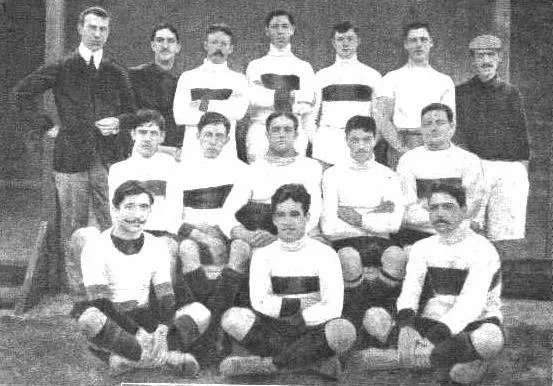

Reading the programme and the archive
The team and venue records for Peruvian Liga 1 pair ADT at Unión Tarma and Alianza Atlético at Campeones del 36. A commentator may use a sponsor name, an older stadium name or the city in place of the official ground. When a search produces two candidate fixtures, the home side and the season help establish which venue listing belongs with the game.
Peruvian Liga 1 schedules can attach more than one time to the same programme. Kickoff belongs to the game. The television slot can open on interviews, show the walkout and then switch to the match commentary. For a delayed viewing, compare the fixture date with the broadcast date. A late evening replay often begins on the following calendar day.
What a host-city time means at home
Consider a clock example for a viewer following Peruvian Liga 1. Imagine that a programme lists 19:30 in Lima on 12 December 2026. That reads 00:30 on 13 December in London and 09:30 on 13 December in Tokyo. The example is a time conversion. A real fixture still needs its own published start and host city.
Using the same 19:30 in Lima on 12 June 2027 gives 01:30 on 13 June in London and 09:30 on 13 June in Tokyo. Compare those two dates before carrying a time difference into another Peruvian Liga 1 round. If the scheduling app already displays your local time, save the entry as shown. Converting it again is how an otherwise correct reminder ends up an hour or a whole day out.
Who carries the event in your market?
Begin with the organizer’s event page for Peruvian Liga 1 and choose the event, edition or fixture. Follow a “where to watch” link for the country in which the screen will be used. In the local broadcaster’s own guide, match the event details with the network or streaming service and the start of coverage. A worldwide organizer feed and a domestic broadcaster may use different names for the same programme.
Finding the part you came for
For an archive search under Peruvian Liga 1, start with the official results before typing a long description of a moment. Check the length of the replay if you want the full match. A compact cut can include every goal while missing the opening exchanges and the tactical changes between them. Penalty shootouts and post-match interviews can also sit in a separate video.
Venues in the record
The Peruvian Liga 1 reference table pairs team, city and stadium. Its entries include “ADT · Tarma · Unión Tarma”, “Alianza Atlético · Sullana · Campeones del 36” and “Universitario de Deportes · Lima · Monumental”. Ground and circuit names change with sponsors and renovations. A location in a contemporary report can survive a rebranding, which makes the city and venue useful when matching a later upload to an old programme.
| Team | City | Stadium |
|---|---|---|
| ADT | Tarma | Unión Tarma |
| Alianza Atlético | Sullana | Campeones del 36 |
| Universitario de Deportes | Lima | Monumental |
| UTC | Cajamarca | Héroes de San Ramón |
Earlier results
The Peruvian Liga 1 reference table pairs club, winners, runners-up and winning years. Its entries include “Sport Boys · 6 · 9 · 1935, 1937, 1942, 1951, 1958, 1984”, “Deportivo Municipal · 4 · 8 · 1938, 1940, 1943, 1950” and “Atlético Chalaco · 2 · 4 · 1930, 1947”. A winner, a runner-up and a club’s cumulative title count answer different archive questions. For footage from one edition, begin with a specific dated result. A table covering several seasons can include the same name in several roles.
| Club | Winners | Runners-up | Winning years |
|---|---|---|---|
| Sport Boys | 6 | 9 | 1935, 1937, 1942, 1951, 1958, 1984 |
| Deportivo Municipal | 4 | 8 | 1938, 1940, 1943, 1950 |
| Atlético Chalaco | 2 | 4 | 1930, 1947 |
| Juan Aurich | 1 | 2 | 2011 |
Competition records and edition names
For an edition search, the competition profile for Peruvian Liga 1 records first season (1912), country (Peru), confederation (CONMEBOL), organizing body (FPF) and division level (1). Those are useful identifiers when an old television caption uses a different name or a translation. For a specific fixture, resolve the actual season first. Club membership, rules and venues in a general profile can reflect a later edition than the game in the archive.
Two entries in the reference tables associated with Peruvian Liga 1 illustrate the level of detail available. One records team ADT, city Tarma, stadium Unión Tarma. The other records team Alianza Atlético, city Sullana, stadium Campeones del 36. Read these as entries from the competition’s background tables. A new fixture needs its own announcement. A source result, unlike a recycled highlights title, preserves the names or places used for that particular record.
Questions and answers
Which schedule details identify Peruvian Liga 1?
Liga 1 refers here to Peru's football top flight. Use Peru and the season phase, particularly when an international results search returns an identically styled league name from another country.