
NRL viewing guide
NRL identifies professional rugby league, with different rules and competitions from rugby union. Use the club, opponent and round. State of Origin uses representative sides and its own schedule.
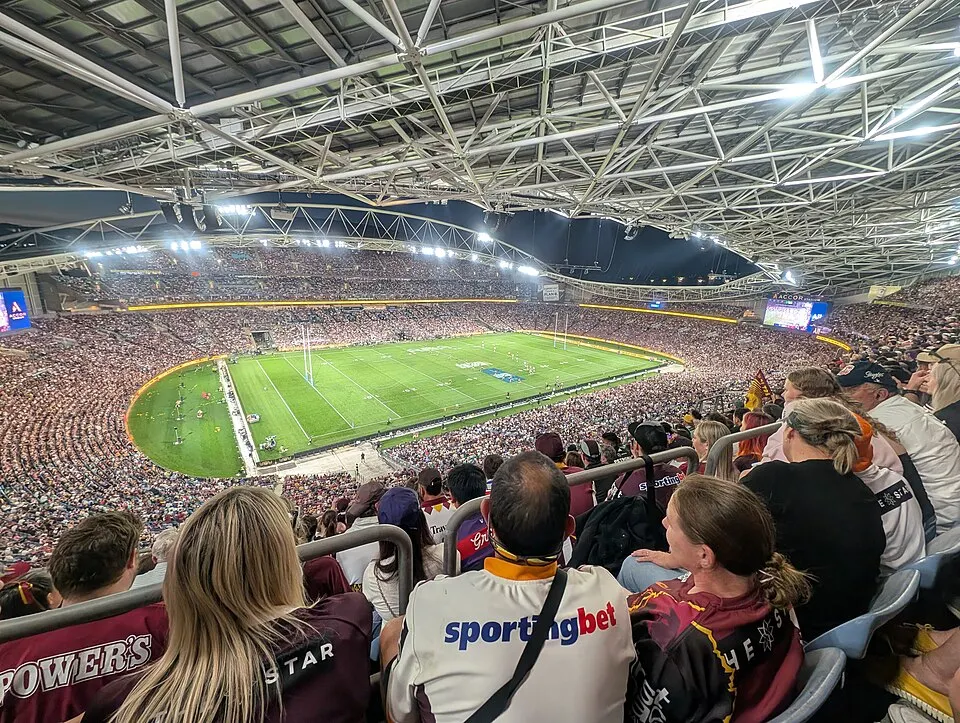

Which rugby league fixture?
NRL identifies professional rugby league, with different rules and competitions from rugby union. Use the club, opponent and round. State of Origin uses representative sides and its own schedule.
For NRL, keep the teams, ground, competition and round on the same line when saving a fixture. Rugby league and rugby union use different competitions and playing structures. Check the code first. A representative match and a club fixture can feature many of the same players without sharing team names, venue or rights arrangements.
Reading the programme and the archive
The history of NRL reaches back to 1998. Among its identifying details are league level — Tier 1. Take the edition year from the actual results when looking for archive footage. A present-day description can name a venue, format or governing body that was different when the footage was recorded. Compare the title on screen with the description in the competition background.
NRL schedules can attach more than one time to the same programme. A schedule’s opening time can include studio build-up and team announcements. Use the ground and the published kickoff, particularly when comparing an Australian listing with a late-night or morning programme overseas.
What a host-city time means at home
Consider a clock example for a viewer following NRL. Imagine that a programme lists 19:30 in Sydney on 12 December 2026. That reads 08:30 on 12 December in London and 03:30 on 12 December in New York. The example is a time conversion. A real fixture still needs its own published start and host city.
Using the same 19:30 in Sydney on 12 June 2027 gives 10:30 on 12 June in London and 05:30 on 12 June in New York. Compare those two dates before carrying a time difference into another NRL round. If the scheduling app already displays your local time, save the entry as shown. Converting it again is how an otherwise correct reminder ends up an hour or a whole day out.
Who carries the event in your market?
Begin with the organizer’s event page for NRL and choose the event, edition or fixture. Follow a “where to watch” link for the country in which the screen will be used. In the local broadcaster’s own guide, match the event details with the network or streaming service and the start of coverage. A worldwide organizer feed and a domestic broadcaster may use different names for the same programme.
Finding the part you came for
For an archive search under NRL, start with the official results before typing a long description of a moment. To trace a try or an important tackle, keep the teams, half and clock. A condensed match can omit the earlier sets that created the field position. A match report and full replay provide different evidence of that sequence.
Competition picture desk

Earlier results
The NRL reference table pairs team and runners-up. Its entries include “Sydney Roosters · 15”, “St. George Dragons · 12” and “Warriors · 2”. A winner, a runner-up and a club’s cumulative title count answer different archive questions. For footage from one edition, begin with a specific dated result. A table covering several seasons can include the same name in several roles.
| Team | Runners-up |
|---|---|
| Sydney Roosters | 15 |
| St. George Dragons | 12 |
| Warriors | 2 |
| Sydney University | 1 |
Names in team records
The NRL reference table pairs name and club. Its entries include “Michael Maguire · Brisbane Broncos”, “Ricky Stuart · Canberra Raiders” and “Benji Marshall · Wests Tigers”. Read the team name in the context of the listed season. League membership, club names and divisional labels can change. A current team page can be useful for spelling without establishing the level at which an older event was played.
| Name | Club |
|---|---|
| Michael Maguire | Brisbane Broncos |
| Ricky Stuart | Canberra Raiders |
| Benji Marshall | Wests Tigers |
| Kristian Woolf | Dolphins |
Competition records and edition names
For an edition search, the competition profile for NRL records first season (1998), country (Australia (17 teams) New Zealand (1 team) Papua New Guinea (1 team, planned)) and division level (Tier 1). Those are useful identifiers when an old television caption uses a different name or a translation. For a specific fixture, resolve the actual season first. Club membership, rules and venues in a general profile can reflect a later edition than the game in the archive.
Two entries in the reference tables associated with NRL illustrate the level of detail available. One records club Papua New Guinea Chiefs, location Port Moresby. The other records club Papua New Guinea Chiefs, location Port Moresby. Read these as entries from the competition’s background tables. A new fixture needs its own announcement. A source result, unlike a recycled highlights title, preserves the names or places used for that particular record.
Questions and answers
Which schedule details identify NRL?
NRL identifies professional rugby league, with different rules and competitions from rugby union. Use the club, opponent and round. State of Origin uses representative sides and its own schedule.