
IIHF Women's World Championship viewing guide
The IIHF lists more than one division in international women's hockey. Team names and country flags can appear at different levels. Match the division and host with the edition year.
IIHF Women's World Championship competition identity. Original logo record.

A gold medal decided 17 minutes into overtime
Three periods did not separate the United States and Canada in the 2025 women’s final in České Budějovice. The sides were level at three goals each. Tessa Janecke scored the winner for the United States at 17:06 of overtime, producing a 4–3 final score. The game centre labels that scoring play as overtime. Its minute and second belong to the extra period, so looking for 17:06 of the first period will land on entirely different play.
For a replay of the winning sequence, use the date, 20 April, and open the section after the third intermission. If the video player shows elapsed programme time, allow for stoppages and breaks before trying to match its display to the official game clock. A recap headed USA versus Canada may include meetings from several seasons. The combination of Janecke, the Czech venue and the overtime score singles out this particular gold-medal game even when the programme tile omits the year.
IIHF · United States–Canada, 20 April 2025From the competition archive
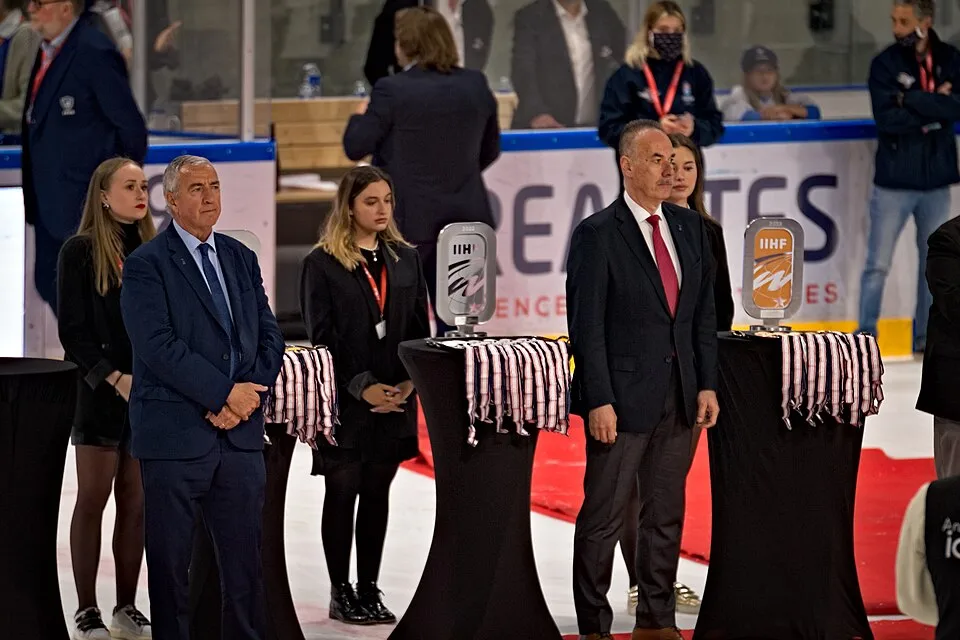

Which women's world championship division?
The IIHF lists more than one division in international women's hockey. Team names and country flags can appear at different levels. Match the division and host with the edition year.
For IIHF Women's World Championship, keep the clubs, rink, game date and competition on the same line when saving a fixture. A fixture lookup needs both clubs and the rink. The same team names can recur across a regular season or a playoff series. A game number, home city or dated score sheet can separate those meetings even when the artwork and English-language team names barely change.
Reading the programme and the archive
The history of IIHF Women's World Championship reaches back to 1990. Take the edition year from the actual results when looking for archive footage. A present-day description can name a venue, format or governing body that was different when the footage was recorded. Compare the title on screen with the description in the competition background.
IIHF Women's World Championship schedules can attach more than one time to the same programme. The announced start usually refers to the local arena. The listed television programme may open earlier for warm-ups and analysis. When an evening game crosses midnight for you, keep the arena date in the search as well as the local date shown by the television guide.
What a host-city time means at home
Consider a clock example for a viewer following IIHF Women's World Championship. Imagine that a programme lists 19:30 in Stockholm on 12 December 2026. That reads 13:30 on 12 December in Toronto and 03:30 on 13 December in Tokyo. The example is a time conversion. A real fixture still needs its own published start and host city.
Using the same 19:30 in Stockholm on 12 June 2027 gives 13:30 on 12 June in Toronto and 02:30 on 13 June in Tokyo. Compare those two dates before carrying a time difference into another IIHF Women's World Championship round. If the scheduling app already displays your local time, save the entry as shown. Converting it again is how an otherwise correct reminder ends up an hour or a whole day out.
Who carries the event in your market?
Begin with the organizer’s event page for IIHF Women's World Championship and choose the event, edition or fixture. Follow a “where to watch” link for the country in which the screen will be used. In the local broadcaster’s own guide, match the event details with the network or streaming service and the start of coverage. A worldwide organizer feed and a domestic broadcaster may use different names for the same programme.
Finding the part you came for
For an archive search under IIHF Women's World Championship, start with the official results before typing a long description of a moment. For a particular play, note the period and time on the game clock. Overtime and a shootout can have their own highlights clips. A condensed game preserves more of the action than a goal compilation but may leave out stoppages or an earlier penalty.
One documented edition
A dated example is 2024 IIHF Women's World Championship. The published date or season is 3–14 April. The edition profile identifies 1 (in 1 host city) in its venue or host information. It records Canada (13th title) in the winning position and United States in second place. Its entry for teams reads 10. Use those details when comparing a film of IIHF Women's World Championship with an organizer’s newer season page. An upload date can be years after the competition, while the venue or edition on the original graphic ties the footage to its sporting record.
How the field is described
The IIHF Women's World Championship reference table pairs country, gold, silver and bronze. Its entries include “Canada · 13 · 11 · 1”, “United States · 12 · 13 · 0” and “Hungary · 0 · 0 · 0”. A country, confederation or region can identify where an entrant qualified, the association it represented or where an event took place. Read the actual column headings before using a country as a clue to a viewing territory.
| Country | Gold | Silver | Bronze |
|---|---|---|---|
| Canada | 13 | 11 | 1 |
| United States | 12 | 13 | 0 |
| Hungary | 0 | 0 | 0 |
| France | 0 | 0 | 0 |
Reading the competition tables
The IIHF Women's World Championship reference table pairs year and host country. Its entries include “2025 · Czech Republic”, “2007 · Canada †” and “2019 · Finland”. Different reference tables can track editions, events, people or organizations. The headings preserve that distinction. Copying a name into a search without its category can make a season summary look like a result from one specific meeting.
| Year | Host country |
|---|---|
| 2025 | Czech Republic |
| 2007 | Canada † |
| 2019 | Finland |
| 2022 | Denmark |
Competition records and edition names
For an edition search, the competition profile for IIHF Women's World Championship records first season (1990). Those are useful identifiers when an old television caption uses a different name or a translation. For a specific fixture, resolve the actual season first. Club membership, rules and venues in a general profile can reflect a later edition than the game in the archive.
Questions and answers
Which schedule details identify IIHF Women's World Championship?
The IIHF lists more than one division in international women's hockey. Team names and country flags can appear at different levels. Match the division and host with the edition year.