
Formula 3 viewing guide
FIA Formula 3 uses its own classification at a shared meeting. Keep the race number and car or driver. A Formula One session timetable may omit support races entirely.

Formula 3 logo, 2026 design in the source file. Original logo record.

The pass that decided the title at Monza
The 2024 Monza Feature Race had a winner at the front and a championship being decided several places behind him. Sami Meguetounif won the race. His Trident teammate Leonardo Fornaroli still had one corner in which to change the destination of the drivers’ title. He passed Christian Mansell at the end of the lap and secured the championship ahead of Gabriele Minì. Reading a list of race winners would take you to Meguetounif and miss the move that mattered to Fornaroli.
For the title moment, look for the Feature Race and follow Mansell and Fornaroli approaching the final corner. A search for the Monza race winner is more likely to show the leader taking the flag. In a full replay you can follow both stories by watching the position graphics as well as the car in front. A caption that calls Fornaroli the champion describes the season. When you record the result of the race itself, put Meguetounif in the winner’s field.
FIA Formula 3 · 2024 Monza Feature RaceFrom the competition archive
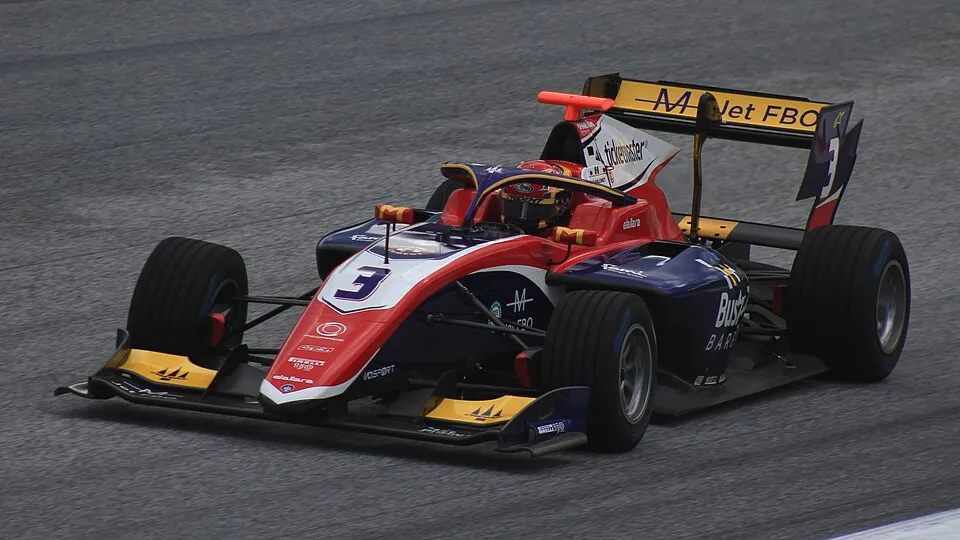

The Formula 3 weekend and the Grand Prix
FIA Formula 3 uses its own classification at a shared meeting. Keep the race number and car or driver. A Formula One session timetable may omit support races entirely.
For Formula 3, keep the series, circuit, session and class where applicable on the same line when saving a fixture. Start with the circuit and session. A meeting can appear under a city, a circuit sponsor or a championship round number. Practice, qualifying and the race are distinct entries. For a multiclass grid, a class result and the overall classification answer different questions about the same finish.
Reading the programme and the archive
The history of Formula 3 reaches back to 2019. Take the edition year from the actual results when looking for archive footage. A present-day description can name a venue, format or governing body that was different when the footage was recorded. Compare the title on screen with the description in the competition background.
Formula 3 schedules can attach more than one time to the same programme. The venue timetable may list a pit-lane opening, a formation lap or the start of timed competition. A broadcaster can add a grid walk before any of them. Save the organizer’s session name with the time so a search for the round does not land on an earlier session.
What a host-city time means at home
Consider a clock example for a viewer following Formula 3. Imagine that a programme lists 19:30 in London on 12 December 2026. That reads 14:30 on 12 December in Toronto and 04:30 on 13 December in Tokyo. The example is a time conversion. A real fixture still needs its own published start and host city.
Using the same 19:30 in London on 12 June 2027 gives 14:30 on 12 June in Toronto and 03:30 on 13 June in Tokyo. Compare those two dates before carrying a time difference into another Formula 3 round. If the scheduling app already displays your local time, save the entry as shown. Converting it again is how an otherwise correct reminder ends up an hour or a whole day out.
Who carries the event in your market?
Begin with the organizer’s event page for Formula 3 and choose the event, edition or fixture. Follow a “where to watch” link for the country in which the screen will be used. In the local broadcaster’s own guide, match the event details with the network or streaming service and the start of coverage. A worldwide organizer feed and a domestic broadcaster may use different names for the same programme.
Finding the part you came for
For an archive search under Formula 3, start with the official results before typing a long description of a moment. A race summary, a full world-feed replay and an onboard camera can show different parts of the same incident. Look for the lap or elapsed race time on the official timing sheet. Circuit names can survive changes in layout, so include the season.
Venues in the record
The Formula 3 reference table pairs circuits, rounds and years. Its entries include “Red Bull Ring · 9 · 2019–present”, “Circuit de Barcelona-Catalunya · 8 · 2019–2026” and “Monza Circuit · 7 · 2019–2020, 2022–present”. Ground and circuit names change with sponsors and renovations. A location in a contemporary report can survive a rebranding, which makes the city and venue useful when matching a later upload to an old programme.
| Circuits | Rounds | Years |
|---|---|---|
| Red Bull Ring | 9 | 2019–present |
| Circuit de Barcelona-Catalunya | 8 | 2019–2026 |
| Monza Circuit | 7 | 2019–2020, 2022–present |
| Mugello Circuit | 1 | 2020 |
A championship can turn on a place down the order
Leonardo Fornaroli took the 2024 FIA Formula 3 title at Monza. A search for the feature-race winner alone misses the drama around the other positions that decided the championship. For the moment itself, locate the Monza feature race, identify Fornaroli on the lap chart, and then compare the late running order with the final drivers' standings. A season review is the place for an explanation of the points permutations. A race replay is the place to see the cars together on track. This distinction also separates the feature from other Formula 3 and Formula 2 action on the same weekend.
Competition records and edition names
For an edition search, the competition profile for Formula 3 records country (International). Those are useful identifiers when an old television caption uses a different name or a translation. For a specific fixture, resolve the actual season first. Club membership, rules and venues in a general profile can reflect a later edition than the game in the archive.
Questions and answers
Which schedule details identify Formula 3?
FIA Formula 3 uses its own classification at a shared meeting. Keep the race number and car or driver. A Formula One session timetable may omit support races entirely.