
Davis Cup viewing guide
A Davis Cup tie is the result between two nations. A specific television entry might show one singles or doubles match. Record the named players when looking for a particular evening.
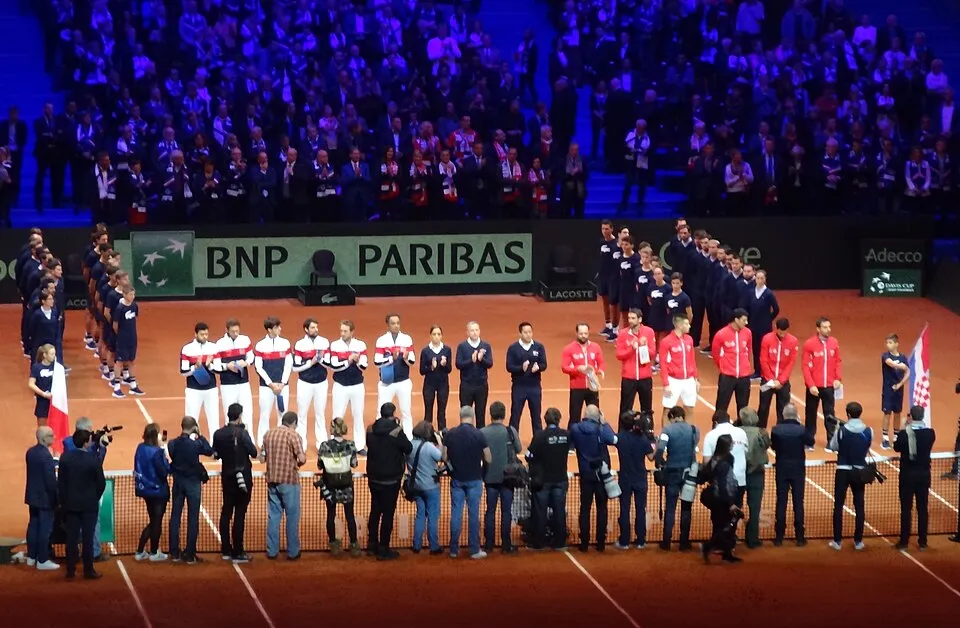


Which rubber in the tie?
A Davis Cup tie is the result between two nations. A specific television entry might show one singles or doubles match. Record the named players when looking for a particular evening.
For Davis Cup, keep the tournament, court, draw and player pairing on the same line when saving a fixture. The order of play puts a pairing on a court in a particular sequence. “Followed by” is different from a fixed start. Singles, doubles and qualifying can share the same ground, and a player may appear more than once in a day with a different partner or opponent.
Reading the programme and the archive
The history of Davis Cup reaches back to 1900. Take the edition year from the actual results when looking for archive footage. A present-day description can name a venue, format or governing body that was different when the footage was recorded. Compare the title on screen with the description in the competition background.
Davis Cup schedules can attach more than one time to the same programme. A court can run late after a long preceding match. Save the day and court alongside the players, then return to the live order of play near the session. A rain interruption or court change can make an old start-time graphic a poor guide to what is on now.
What a host-city time means at home
Consider a clock example for a viewer following Davis Cup. Imagine that a programme lists 19:30 in London on 12 December 2026. That reads 14:30 on 12 December in Toronto and 04:30 on 13 December in Tokyo. The example is a time conversion. A real fixture still needs its own published start and host city.
Using the same 19:30 in London on 12 June 2027 gives 14:30 on 12 June in Toronto and 03:30 on 13 June in Tokyo. Compare those two dates before carrying a time difference into another Davis Cup round. If the scheduling app already displays your local time, save the entry as shown. Converting it again is how an otherwise correct reminder ends up an hour or a whole day out.
Who carries the event in your market?
Begin with the organizer’s event page for Davis Cup and choose the event, edition or fixture. Follow a “where to watch” link for the country in which the screen will be used. In the local broadcaster’s own guide, match the event details with the network or streaming service and the start of coverage. A worldwide organizer feed and a domestic broadcaster may use different names for the same programme.
Finding the part you came for
For an archive search under Davis Cup, start with the official results before typing a long description of a moment. Look for a full-match replay when you want the changing pattern across a set. A tournament highlights show can move from court to court and a short individual clip can contain only a deciding point. The round and opponent help identify a particular meeting.
Competition picture desk

Earlier results
The Davis Cup reference table pairs country, winners and runners-up. Its entries include “France · 1927, 1928, 1929, 1930, 1931, 1932, 1991, 1996, 2001, 2017 (10) · 1925, 1926, 1933, 1982, 1999, 2002, 2010, 2014, 2018 (9)”, “British Isles Great Britain · 1903, 1904, 1905, 1906, 1912, 1933, 1934, 1935, 1936, 2015 (10) · 1900, 1902, 1907, 1913, 1919, 1931, 1937, 1978 (8)” and “Sweden · 1975, 1984, 1985, 1987, 1994, 1997, 1998 (7) · 1983, 1986, 1988, 1989, 1996 (5)”. A winner, a runner-up and a club’s cumulative title count answer different archive questions. For footage from one edition, begin with a specific dated result. A table covering several seasons can include the same name in several roles.
| Country | Winners | Runners-up |
|---|---|---|
| France | 1927, 1928, 1929, 1930, 1931, 1932, 1991, 1996, 2001, 2017 (10) | 1925, 1926, 1933, 1982, 1999, 2002, 2010, 2014, 2018 (9) |
| British Isles Great Britain | 1903, 1904, 1905, 1906, 1912, 1933, 1934, 1935, 1936, 2015 (10) | 1900, 1902, 1907, 1913, 1919, 1931, 1937, 1978 (8) |
| Sweden | 1975, 1984, 1985, 1987, 1994, 1997, 1998 (7) | 1983, 1986, 1988, 1989, 1996 (5) |
Competition records and edition names
For an edition search, the competition profile for Davis Cup records foundation (1900). Those are useful identifiers when an old television caption uses a different name or a translation. For a specific fixture, resolve the actual season first. Club membership, rules and venues in a general profile can reflect a later edition than the game in the archive.
Two entries in the reference tables associated with Davis Cup illustrate the level of detail available. One records country France, winners 1927, 1928, 1929, 1930, 1931, 1932, 1991, 1996, 2001, 2017 (10). The other records country British Isles Great Britain, winners 1903, 1904, 1905, 1906, 1912, 1933, 1934, 1935, 1936, 2015 (10). Read these as entries from the competition’s background tables. A new fixture needs its own announcement. A source result, unlike a recycled highlights title, preserves the names or places used for that particular record.
Questions and answers
Which schedule details identify Davis Cup?
A Davis Cup tie is the result between two nations. A specific television entry might show one singles or doubles match. Record the named players when looking for a particular evening.