Indian Premier League competition guide
Qualifier 1, the Eliminator and Qualifier 2 describe different IPL playoff matches. The losing side in Qualifier 1 can appear again later in the bracket.

Follow the route to the final
The IPL’s 2026 playoff announcement starts with a Qualifier 1 meeting between the two highest-ranked sides. The Eliminator follows its own path, feeding a winner into the second qualifier. In a replay list, the full round name is more informative than a banner reading “playoffs”.
If a team appears twice, read the opponent and date before deciding which match to open. Keep the city as another identifier when talking about a particular evening of play.
Reference details
| Field | Entry |
|---|---|
| Directory name | Indian Premier League |
| Entry type | Sports competition or body |
| Sport | Cricket |
Find this competition
Background to the name
| Detail | Reference record |
|---|---|
| Administrator | Board of Control for Cricket in India |
| Format | Twenty20 |
| First edition | 2008 |
From the event archive
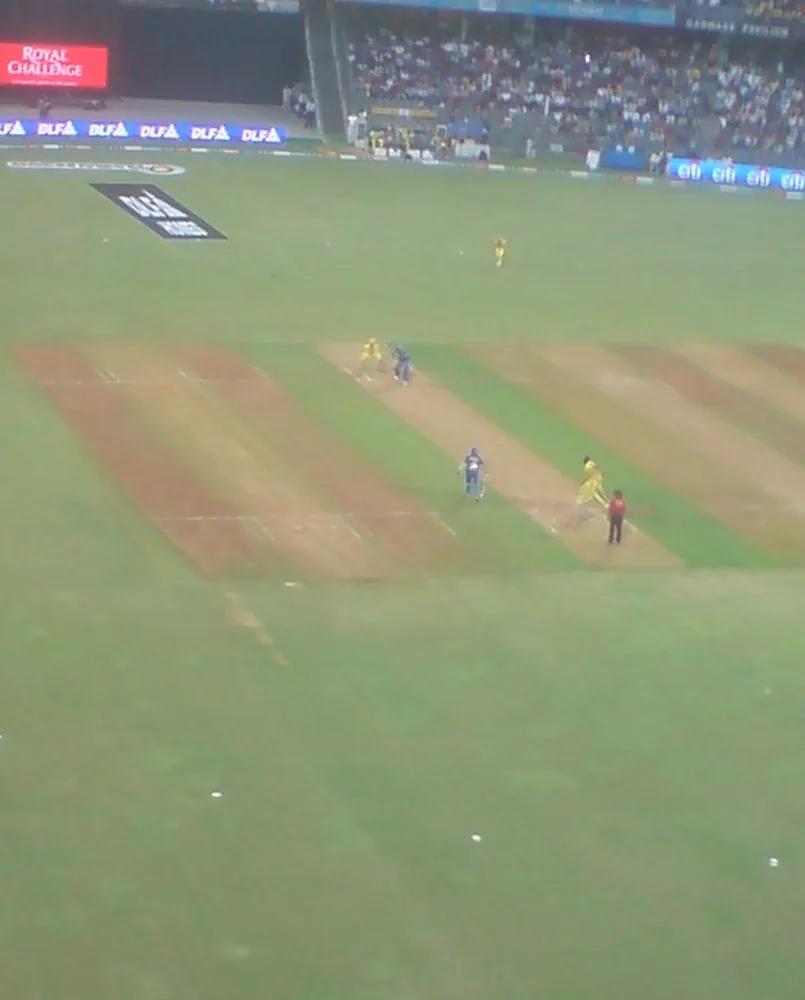

A league fixture or the IPL playoff?
IPL playoff labels include Qualifier and Eliminator. A team can feature more than once late in the tournament. Use the numbered qualifier or the final along with the opponent so a search does not land on the earlier league meeting. Indian Standard Time includes a half-hour offset.
For Indian Premier League, keep the teams, format, ground and day or innings on the same line when saving a fixture. Search by the two teams and the ground, then look at the format before choosing the broadcast. An innings replay, a full day and a highlights programme can use the same captain on the poster. For a multi-day match, the date of the footage matters as much as the opponent.
Reading the programme and the archive
The background record for Indian Premier League adds context to a programme listing. Among its identifying details are administrator — Board of Control for Cricket in India. Take the edition year from the actual results when looking for archive footage. A present-day description can name a venue, format or governing body that was different when the footage was recorded. Compare the title on screen with the description in the competition background.
Indian Premier League schedules can attach more than one time to the same programme. A toss, the start of play and a studio introduction can each have a published time. A weather update may revise the number of overs or move the restart without changing the original fixture date. Use the organizer’s scorecard to distinguish a delay from a completed result.
What a host-city time means at home
Consider a clock example for a viewer following Indian Premier League. Imagine that a programme lists 19:30 in Mumbai on 12 December 2026. That reads 14:00 on 12 December in London and 09:00 on 12 December in New York. The example is a time conversion. A real fixture still needs its own published start and host city.
Using the same 19:30 in Mumbai on 12 June 2027 gives 15:00 on 12 June in London and 10:00 on 12 June in New York. Compare those two dates before carrying a time difference into another Indian Premier League round. If the scheduling app already displays your local time, save the entry as shown. Converting it again is how an otherwise correct reminder ends up an hour or a whole day out.
Who carries the event in your market?
Begin with the organizer’s event page for Indian Premier League and choose the event, edition or fixture. Follow a “where to watch” link for the country in which the screen will be used. In the local broadcaster’s own guide, match the event details with the network or streaming service and the start of coverage. A worldwide organizer feed and a domestic broadcaster may use different names for the same programme.
Finding the part you came for
For an archive search under Indian Premier League, start with the official results before typing a long description of a moment. Decide whether you need the whole innings or one passage of play. A scorecard gives the batting side, over and wicket. Those details narrow a highlights search more reliably than a player surname, especially if the same batter played a second match against the same opponent.
One documented edition
A dated example is 2024 Indian Premier League. The published date or season is 22 March – 26 May 2024. It records Kolkata Knight Riders (3rd title) in the winning position and Sunrisers Hyderabad in second place. Its entry for participants reads 10. Use those details when comparing a film of Indian Premier League with an organizer’s newer season page. An upload date can be years after the competition, while the venue or edition on the original graphic ties the footage to its sporting record.
Names in team records
The Indian Premier League reference table pairs year, player, nationality and team. Its entries include “2008 · MS Dhoni · India · Chennai Super Kings”, “2009 · Kevin Pietersen · England · Royal Challengers Bangalore” and “2025 · Rishabh Pant · India · Lucknow Super Giants”. Read the team name in the context of the listed season. League membership, club names and divisional labels can change. A current team page can be useful for spelling without establishing the level at which an older event was played.
| Year | Player | Nationality | Team |
|---|---|---|---|
| 2008 | MS Dhoni | India | Chennai Super Kings |
| 2009 | Kevin Pietersen | England | Royal Challengers Bangalore |
| 2025 | Rishabh Pant | India | Lucknow Super Giants |
| 2026 | Cameron Green | Australia | Kolkata Knight Riders |
Questions and answers
Which schedule details identify Indian Premier League?
IPL playoff labels include Qualifier and Eliminator. A team can feature more than once late in the tournament. Use the numbered qualifier or the final along with the opponent so a search does not land on the earlier league meeting. Indian Standard Time includes a half-hour offset.
Illustrated guides