ONE PIECE · series guide
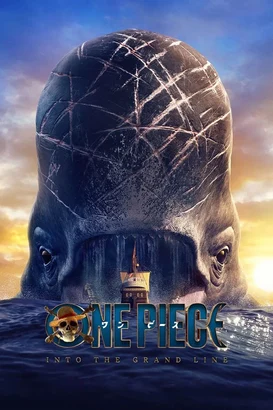
Into the Grand Line is the second season of Netflix’s live-action ONE PIECE. Iñaki Godoy returns as Luffy as the Straw Hats encounter the agents of Baroque Works.
Reading ONE PIECE
This is the live-action series adapted from Eiichiro Oda's manga. The long-running animated series also uses the name ONE PIECE. For a household watching both, keep separate favourites. Matching an arc name without checking the format can land you deep into a completely different episode numbering system.
Luffy treats a crew as a gathering of people with dreams of their own. That helps explain why a new companion receives more attention than a simple tally of powers might suggest. A viewer comparing manga, animation and live action can follow the moment someone decides to stay. It reveals what that version thinks a crew is for.
Who made ONE PIECE?
One Piece and ONE PIECE belong to the same adaptation history. The source credits identify Eiichiro Oda. The television credit to follow is Matt Owens and Steven Maeda (television development). A reader who searches Eiichiro Oda may see an earlier edition, another adaptation, or the original work before reaching an episode. Keep the name of the screen production beside the author when comparing the two. It leaves room to notice a character or incident carried across and to ask what has changed in the telling.
Two names from the cast of ONE PIECE help put faces to the programme. Iñaki Godoy is credited as Monkey D. Luffy, while Emily Rudd appears as Nami. These are series-level credits. In a returning programme the order of the cast on the opening card can change, and a character seen in an earlier run may be absent from a particular instalment. For a guest performance, match the episode title first and then read that episode’s own credits.
From the credits to the screen
Two hands shape the way a scene in ONE PIECE reaches the screen. The credits name Nicole Hirsch Whitaker and Michael Wood for cinematography and Kevin D. Ross and Tessa Verfuss for editing. The music credits include Sonya Belousova and Giona Ostinelli. Try watching an exchange once for the arrangement within a shot, then again for the moment the image changes. A reaction shot held for another beat can shift an audience’s sympathy without altering a line of dialogue. The camera and editing credits give you precise names for the two parts of that observation.
Production credits for ONE PIECE include Kaji Productions (season 1) and Tomorrow Studios. The series record names Netflix in its broadcast history. The language record lists English. A broadcaster listing can help locate the correct programme when the title is translated. For ONE PIECE, keep the original programme record and the particular episode together before looking for a local edition. A service operating in another country can have a different schedule, different captions or a different selection of seasons. Check the title page presented to the account where you intend to watch.
Which edition is dated here?
ONE PIECE has a recorded series start of 31 August 2023. The supplied artwork is filed with season 2. The series reference gives 50–66 minutes for an episode. That figure is a guide to the scale of an instalment, and a particular chapter can have its own running time. When a player opens on the most recent season by default, check the season and episode title before pressing play. Someone starting at the beginning needs the original sequence, even if a new poster has replaced the one used for the premiere.
Other work to explore through the credits
Kevin D. Ross appears in the editing credits for both ONE PIECE and DTF St. Louis. Our other entry identifies DTF St. Louis as a series. That is a reason to put the two records beside each other without forcing them into story order. A viewer interested in the artist can compare one sequence from each work, then return to the end titles to see which other collaborators changed between the two.
Credits at a glance
| Credit | Reference entry |
|---|---|
| Television development | Matt Owens and Steven Maeda |
| Selected cast | Iñaki Godoy, Emily Rudd, Mackenyu, Jacob Romero, and Taz Skylar |
| Cinematography | Nicole Hirsch Whitaker, Michael Wood, Trevor Michael Brown, George Amos, and Lars Cox |
| Editing | Kevin D. Ross, Tessa Verfuss, Eric Litman, Tirsa Hackshaw, and Adam Pearson |
| Music | Sonya Belousova and Giona Ostinelli |
| Classifications | Action-adventure, Comedy-drama, Fantasy, and Swashbuckler |
| Production companies | Kaji Productions (season 1), Tomorrow Studios, and Boy Detective Inc. (season 2-present) |
| Broadcaster or original network | Netflix |
| Language in the production record | English |
| Production country or countries | United States |
| Source material and credit | One Piece · Eiichiro Oda |
| Reference running time | 50–66 minutes |
Recognising the live-action voyage
The crew’s route takes in Reverse Mountain and Drum Island, with Baroque Works pursuing them across the Grand Line. Netflix’s character guide names the live-action cast and explains the group’s aliases. It reveals later plot details, so the season subtitle alone is a safer search term before you watch.
Identify this work
| Field | Record |
|---|---|
| Title | ONE PIECE |
| Format | Television series |
| Catalogue identifier | series:111110 |
| Date recorded by title catalogue | 31 August 2023 |
| Season specified | 2 |
Nearby dates in the series index
| Title | Recorded date | Compared with ONE PIECE |
|---|---|---|
| Survival of the Thickest | 13 July 2023 | 49 days earlier |
| My Life with the Walter Boys | 7 December 2023 | 98 days later |
Questions and answers
What source material does ONE PIECE credit?
The series credits name One Piece and cite Eiichiro Oda in the source history. The director, screenwriters and performers have separate credits for the screen production.
Illustrated guides