
Lupin · series guide
Assane Diop is a contemporary character inspired by Maurice Leblanc's gentleman thief. A search for Arsène Lupin also brings up the original stories and other adaptations. For the French series starring Omar Sy, keep track of the part as well as the episode. Different interfaces can display the division differently.
Reading Lupin
Assane's interest in Arsène Lupin gives the books a place inside the series. A literary reference can work as a clue for him, a joke for a reader or a way to misdirect someone else. That difference is the point of keeping the reader and the fictional gentleman thief distinct, especially in a search that returns both names together.
Who made Lupin?
Arsène Lupin and Lupin belong to the same adaptation history. The source credits identify Maurice Leblanc. The television credit to follow is George Kay and François Uzan (series creator). A reader who searches Maurice Leblanc may see an earlier edition, another adaptation, or the original work before reaching an episode. Keep the name of the screen production beside the author when comparing the two. It leaves room to notice a character or incident carried across and to ask what has changed in the telling.
Two names from the cast of Lupin help put faces to the programme. Omar Sy is credited as Assane Diop, while Ludivine Sagnier appears as Claire Laurent. These are series-level credits. In a returning programme the order of the cast on the opening card can change, and a character seen in an earlier run may be absent from a particular instalment. For a guest performance, match the episode title first and then read that episode’s own credits.
From the credits to the screen
Two hands shape the way a scene in Lupin reaches the screen. The credits name Christophe Nuyens and Martial Schmeltz for cinematography and Jean-Daniel Fernandez-Qundez and Richard Marizy for editing. The music credits include Mathieu Lamboley. Try watching an exchange once for the arrangement within a shot, then again for the moment the image changes. A reaction shot held for another beat can shift an audience’s sympathy without altering a line of dialogue. The camera and editing credits give you precise names for the two parts of that observation.
Production credits for Lupin include Gaumont Television and Carrousel Studios. The series record names Netflix in its broadcast history. The language record lists French. A broadcaster listing can help locate the correct programme when the title is translated. For Lupin, keep the original programme record and the particular episode together before looking for a local edition. A service operating in another country can have a different schedule, different captions or a different selection of seasons. Check the title page presented to the account where you intend to watch.
Which edition is dated here?
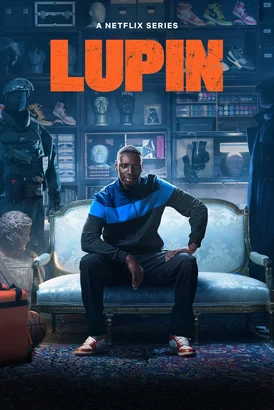
Lupin has a recorded series start of 8 January 2021. The series artwork identifies the show as a whole. The series reference gives 41–53 minutes for an episode. That figure is a guide to the scale of an instalment, and a particular chapter can have its own running time. When a player opens on the most recent season by default, check the season and episode title before pressing play. Someone starting at the beginning needs the original sequence, even if a new poster has replaced the one used for the premiere.
Other work to explore through the credits
George Kay appears in the series creation credits for both Lupin and WAR. Our other entry identifies WAR as a series. That is a reason to put the two records beside each other without forcing them into story order. A viewer interested in the artist can compare one sequence from each work, then return to the end titles to see which other collaborators changed between the two.
Credits at a glance
| Credit | Reference entry |
|---|---|
| Direction | Louis Leterrier, Marcela Said, Ludovic Bernard, Hugo Gélin, and Daniel Grou |
| Series creators | George Kay and François Uzan |
| Writing | George Kay, François Uzan, Eliane Montane, Soiliho Bodin, and Nicolas Clément |
| Selected cast | Omar Sy, Ludivine Sagnier, Antoine Gouy, Soufiane Guerrab, and Shirine Boutella |
| Cinematography | Christophe Nuyens and Martial Schmeltz |
| Editing | Jean-Daniel Fernandez-Qundez, Richard Marizy, and Audrey Simonaud |
| Music | Mathieu Lamboley |
| Classifications | Crime drama, Thriller, and Mystery |
| Production companies | Gaumont Television and Carrousel Studios |
| Broadcaster or original network | Netflix |
| Language in the production record | French |
| Production country or countries | France |
| Source material and credit | Arsène Lupin · Maurice Leblanc |
| Reference running time | 41–53 minutes |
Identify this work
| Field | Record |
|---|---|
| Title | Lupin |
| Format | Television series |
| Catalogue identifier | series:96677 |
| Date recorded by title catalogue | 8 January 2021 |
Nearby dates in the series index
| Title | Recorded date | Compared with Lupin |
|---|---|---|
| Bridgerton | 25 December 2020 | 14 days earlier |
| Hacks | 13 May 2021 | 125 days later |
Questions and answers
What source material does Lupin credit?
The series credits name Arsène Lupin and cite Maurice Leblanc in the source history. The director, screenwriters and performers have separate credits for the screen production.