“Wuthering Heights” · film guide
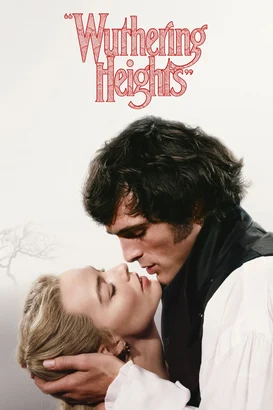
The quotation marks are part of the styling of Emerald Fennell's adaptation. Its source is Emily Brontë’s novel. A library search without punctuation will turn up many other versions, including television serials. Fennell's name gives a firmer identification than a moorland landscape on a poster.
Reading “Wuthering Heights”
Readers remember Brontë in very different ways. Some recall a love story, some the cruelty, others the fact that events come through people telling them at a distance. A screen adaptation has to decide whose face, memory or words to trust at each point. That decision often says more about its relationship to the book than a checklist of missing scenes.
Who made “Wuthering Heights”?
“Wuthering Heights” appears twice in the source history. Emily Brontë is credited for the material that carries that name, and Emerald Fennell for directing the feature. In a catalogue that also holds printed work, games or other adaptations, try the screen credit beside Wuthering Heights. The combination points to the work in which the story is presented through a performance, a camera or an animator’s choices. It is especially helpful when a poster keeps the source title but drops the author’s name.
Margot Robbie plays Catherine "Cathy" Earnshaw in “Wuthering Heights”. Alongside that credit, Jacob Elordi is listed as Heathcliff. Those two pairings can settle an identification when a poster gives the names of actors but a synopsis speaks only about characters. They are also a quiet way to prepare for a first screening. You can recognise two people when their names come up in dialogue without reading a plot breakdown that explains what either of them will do next.
From the credits to the screen
Two hands shape the way a scene in “Wuthering Heights” reaches the screen. The credits name Linus Sandgren for cinematography and Victoria Boydell for editing. The music credits include Anthony Willis (score) and Charli XCX (songs). Try watching an exchange once for the arrangement within a shot, then again for the moment the image changes. A reaction shot held for another beat can shift an audience’s sympathy without altering a line of dialogue. The camera and editing credits give you precise names for the two parts of that observation.
Production credits for “Wuthering Heights” include MRC and LuckyChap Entertainment. Warner Bros. Pictures appears in the distribution credits. The language record lists English. Those details explain the path from a picture being made to it being shown, and they can take different forms in different countries. To choose a dubbed or subtitled showing of “Wuthering Heights”, read the actual ticket or player language menu. A distributor’s name on a poster supplies no information about which audio or caption tracks a particular local edition carries.
Which edition is dated here?
The reference record dates “Wuthering Heights” to 13 February 2026 and gives a running time of 136 minutes. The running time is useful when distinguishing the feature from a trailer, a preview or an interview filed under its name. A scheduled television slot can run longer because it includes introductions, breaks or a following programme. If timing matters, compare the edition named by the venue or player with the film credit before treating the length of the schedule block as the length of the picture.
Other work to explore through the credits
Linus Sandgren appears in the cinematography credits for both “Wuthering Heights” and Dune: Part Three. Our other entry identifies Dune: Part Three as a feature. That is a reason to put the two records beside each other without forcing them into story order. A viewer interested in the artist can compare one sequence from each work, then return to the end titles to see which other collaborators changed between the two.
There is another path into the guide through Jacob Elordi, who appears in the cast of The Dog Stars as well as “Wuthering Heights”. To follow the connection, take the name into the second guide and find the role attached to this particular production. An actor’s characters, a writer’s stories or a musician’s scores can inhabit entirely separate worlds. The repeated name is the documented link between these two entries.
Credits at a glance
| Credit | Reference entry |
|---|---|
| Direction | Emerald Fennell |
| Writing | Emerald Fennell |
| Selected cast | Margot Robbie, Jacob Elordi, Hong Chau, Shazad Latif, and Alison Oliver |
| Cinematography | Linus Sandgren |
| Editing | Victoria Boydell |
| Music | Anthony Willis (score) and Charli XCX (songs) |
| Classifications | romantic drama film, drama film, Gothic film, and psychological drama film |
| Production companies | MRC, LuckyChap Entertainment, and Lie Still |
| Language in the production record | English |
| Production country or countries | United Kingdom and United States |
| Source material and credit | Wuthering Heights · Emily Brontë |
| Reference running time | 136 minutes |
Identify this work
| Field | Record |
|---|---|
| Title | “Wuthering Heights” |
| Format | Film |
| Catalogue identifier | movie:1316092 |
| Date recorded by title catalogue | 13 February 2026 |
Nearby dates in the film index
Questions and answers
What source material does “Wuthering Heights” credit?
The feature credits name Wuthering Heights and cite Emily Brontë in the source history. The director, screenwriters and performers have separate credits for the screen production.
Illustrated guides