Supergirl · film guide
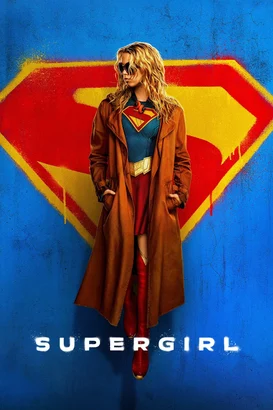
Milly Alcock plays Kara Zor-El in DC Studios’ 2026 Supergirl. A new enemy draws her into an interstellar journey with an unexpected companion.
Reading Supergirl
Kara Zor-El is the character to follow here. Milly Alcock plays her in the feature directed by Craig Gillespie. A television episode about Supergirl may carry the same symbol on the poster, especially in a small on-screen thumbnail. Adding the actor or filmmaker will bring the film into much sharper focus.
Kara's civilian name, the name on her costume and the film's title all point to one person. The companion travelling beside her has a different reason for being on the journey. A reader approaching from the comics can follow how the film distributes attention between those two lives, even when its spectacle appears to belong to Supergirl alone.
Who made Supergirl?
Craig Gillespie directed Supergirl. The writing credits include Ana Nogueira. Those names are worth keeping in their respective places. An interview about writing might describe a scene at a much earlier stage than the one the director eventually filmed. A viewer comparing the finished sequence with an interview can credit an idea to the right part of the process without assuming that the wording, order or staging survived unchanged.
Milly Alcock plays Kara Zor-El / Supergirl in Supergirl. Alongside that credit, Matthias Schoenaerts is listed as Krem of the Yellow Hills. Those two pairings can settle an identification when a poster gives the names of actors but a synopsis speaks only about characters. They are also a quiet way to prepare for a first screening. You can recognise two people when their names come up in dialogue without reading a plot breakdown that explains what either of them will do next.
From the credits to the screen
Two hands shape the way a scene in Supergirl reaches the screen. The credits name Rob Hardy for cinematography and Tatiana S. Riegel and Fred Raskin for editing. The music credits include Claudia Sarne. Try watching an exchange once for the arrangement within a shot, then again for the moment the image changes. A reaction shot held for another beat can shift an audience’s sympathy without altering a line of dialogue. The camera and editing credits give you precise names for the two parts of that observation.
Production credits for Supergirl include DC Studios and Troll Court Entertainment. Warner Bros. Pictures appears in the distribution credits. The language record lists English. Those details explain the path from a picture being made to it being shown, and they can take different forms in different countries. To choose a dubbed or subtitled showing of Supergirl, read the actual ticket or player language menu. A distributor’s name on a poster supplies no information about which audio or caption tracks a particular local edition carries.
Which edition is dated here?
The reference record dates Supergirl to 25 June 2026 and gives a running time of 108 minutes. The running time is useful when distinguishing the feature from a trailer, a preview or an interview filed under its name. A scheduled television slot can run longer because it includes introductions, breaks or a following programme. If timing matters, compare the edition named by the venue or player with the film credit before treating the length of the schedule block as the length of the picture.
Other work to explore through the credits
Fred Raskin appears in the editing credits for both Supergirl and Man of Tomorrow. Another connection is David Corenswet, credited for performances here and performances there. That is a reason to put the two records beside each other without forcing them into story order. A viewer interested in the artist can compare one sequence from each work, then return to the end titles to see which other collaborators changed between the two.
Clayface offers a second point of comparison. Rob Hardy has cinematography credits on both works. To follow the connection, take the name into the second guide and find the role attached to this particular production. An actor’s characters, a writer’s stories or a musician’s scores can inhabit entirely separate worlds. The repeated name is the documented link between these two entries.
Credits at a glance
| Credit | Reference entry |
|---|---|
| Direction | Craig Gillespie |
| Writing | Ana Nogueira |
| Selected cast | Milly Alcock, Matthias Schoenaerts, Eve Ridley, David Krumholtz, and Emily Beecham |
| Cinematography | Rob Hardy |
| Editing | Tatiana S. Riegel and Fred Raskin |
| Music | Claudia Sarne |
| Classifications | superhero film and action film |
| Production companies | DC Studios, Troll Court Entertainment, and The Safran Company |
| Language in the production record | English |
| Production country or countries | United States |
| Reference running time | 108 minutes |
Finding Kara’s feature film
DC credits Craig Gillespie as director and Ana Nogueira as screenwriter. That pairing identifies this feature wherever the one-word title appears alongside television episodes or older adaptations. The premise follows Kara across space, placing her pursuit and the companion she takes along at the centre of the story.
Identify this work
| Field | Record |
|---|---|
| Title | Supergirl |
| Format | Film |
| Catalogue identifier | movie:1081003 |
| Date recorded by title catalogue | 25 June 2026 |
Nearby dates in the film index
| Title | Recorded date | Compared with Supergirl |
|---|---|---|
| Toy Story 5 | 19 June 2026 | 6 days earlier |
| Minions & Monsters | 1 July 2026 | 6 days later |
Questions and answers
Who is credited as Kara Zor-El / Supergirl in Supergirl?
Milly Alcock is credited as Kara Zor-El / Supergirl in this feature. The cast also includes Matthias Schoenaerts as Krem of the Yellow Hills.
Illustrated guides