Street Fighter · film guide
Kitao Sakurai directs this live-action version of Capcom’s fighting game. Typing Street Fighter into a television search can produce an earlier movie, an animation or footage of someone playing. For a movie night built around this particular adaptation, begin with Sakurai and check that the result is a feature.
Reading Street Fighter
Ken and Ryu have recognisable fighting styles, but a film can also give their friendship a history between bouts. Viewers familiar with the game might watch what happens before a fight begins. The person who chooses the contest, and the person who would rather walk away, tell us something a character-selection screen cannot.
Who made Street Fighter?
Street Fighter appears twice in the source history. Capcom is credited for the material that carries that name, and Kitao Sakurai for directing the feature. The film’s writing credits include T. J. Fixman and Kitao Sakurai. In a catalogue that also holds printed work, games or other adaptations, try the screen credit beside Street Fighter. The combination points to the work in which the story is presented through a performance, a camera or an animator’s choices. It is especially helpful when a poster keeps the source title but drops the author’s name.
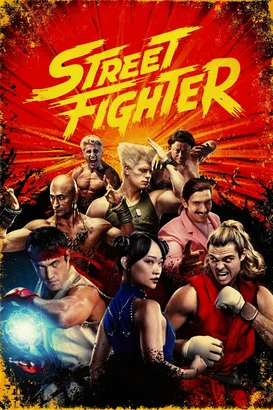
Noah Centineo plays Ken Masters in Street Fighter. Alongside that credit, Andrew Koji is listed as Ryu / Dark Ryu. Those two pairings can settle an identification when a poster gives the names of actors but a synopsis speaks only about characters. They are also a quiet way to prepare for a first screening. You can recognise two people when their names come up in dialogue without reading a plot breakdown that explains what either of them will do next.
From the credits to the screen
Two hands shape the way a scene in Street Fighter reaches the screen. The credits name Ken Seng for cinematography and James Thomas and Delaney Del Vecchio for editing. The music credits include Leo Birenberg and Zach Robinson. Try watching an exchange once for the arrangement within a shot, then again for the moment the image changes. A reaction shot held for another beat can shift an audience’s sympathy without altering a line of dialogue. The camera and editing credits give you precise names for the two parts of that observation.
Production credits for Street Fighter include Legendary Pictures and Capcom. Paramount Pictures appears in the distribution credits. The language record lists English. Those details explain the path from a picture being made to it being shown, and they can take different forms in different countries. To choose a dubbed or subtitled showing of Street Fighter, read the actual ticket or player language menu. A distributor’s name on a poster supplies no information about which audio or caption tracks a particular local edition carries.
Which edition is dated here?
The reference record dates Street Fighter to 16 October 2026 and gives a running time of 121 minutes. The running time is useful when distinguishing the feature from a trailer, a preview or an interview filed under its name. A scheduled television slot can run longer because it includes introductions, breaks or a following programme. If timing matters, compare the edition named by the venue or player with the film credit before treating the length of the schedule block as the length of the picture.
Other work to explore through the credits
Zach Robinson appears in the music credits for both Street Fighter and Super Troopers 3. Another connection is Leo Birenberg, credited for music here and music there. That is a reason to put the two records beside each other without forcing them into story order. A viewer interested in the artist can compare one sequence from each work, then return to the end titles to see which other collaborators changed between the two.
Credits at a glance
| Credit | Reference entry |
|---|---|
| Direction | Kitao Sakurai |
| Writing | T. J. Fixman and Kitao Sakurai |
| Selected cast | Noah Centineo, Andrew Koji, Callina Liang, Joe "Roman Reigns" Anoa'i, and David Dastmalchian |
| Cinematography | Ken Seng |
| Editing | James Thomas and Delaney Del Vecchio |
| Music | Leo Birenberg and Zach Robinson |
| Classifications | science fiction action film and martial arts film |
| Production companies | Legendary Pictures and Capcom |
| Language in the production record | English |
| Production country or countries | United States and Japan |
| Source material and credit | Street Fighter · Capcom |
| Reference running time | 121 minutes |
Identify this work
| Field | Record |
|---|---|
| Title | Street Fighter |
| Format | Film |
| Catalogue identifier | movie:1153576 |
| Date recorded by title catalogue | 16 October 2026 |
Nearby dates in the film index
| Title | Recorded date | Compared with Street Fighter |
|---|---|---|
| The Social Reckoning | 9 October 2026 | 7 days earlier |
| Clayface | 19 October 2026 | 3 days later |
Questions and answers
What source material does Street Fighter credit?
The feature credits name Street Fighter and cite Capcom in the source history. The director, screenwriters and performers have separate credits for the screen production.
Illustrated guides