
Peaky Blinders: The Immortal Man · film guide
The Immortal Man is a feature film that returns Tommy Shelby to Birmingham in 1940. Cillian Murphy reprises the role in a story written by series creator Steven Knight.
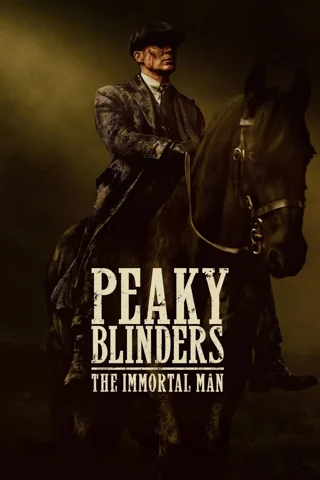
Reading Peaky Blinders: The Immortal Man
Thomas Shelby returns in a feature, with Cillian Murphy reprising the role from the television series. Steven Knight wrote the film and Tom Harper directs. If a watchlist jumps from the last television season to The Immortal Man, that change of format is intentional. The movie has a single programme entry.
Tommy Shelby is returning to a city as well as to a family. The move to wartime gives streets and allegiances with a history in the series a different political meaning. A viewer who remembers Birmingham but has lost track of a supporting plot can begin with that larger change and recover the relationships as the feature unfolds.
Who made Peaky Blinders: The Immortal Man?
The published credits trace Peaky Blinders: The Immortal Man to Peaky Blinders, associated with Steven Knight. Tom Harper took on the directing role for the screen version. The film’s writing credits include Steven Knight. In a catalogue that also holds printed work, games or other adaptations, try the screen credit beside Peaky Blinders. The combination points to the work in which the story is presented through a performance, a camera or an animator’s choices. It is especially helpful when a poster keeps the source title but drops the author’s name.
Barry Keoghan plays Erasmus "Duke" Shelby in Peaky Blinders: The Immortal Man. Alongside that credit, Rebecca Ferguson is listed as Kaulo and Zelda Chiriklo. Those two pairings can settle an identification when a poster gives the names of actors but a synopsis speaks only about characters. They are also a quiet way to prepare for a first screening. You can recognise two people when their names come up in dialogue without reading a plot breakdown that explains what either of them will do next.
From the credits to the screen
Two hands shape the way a scene in Peaky Blinders: The Immortal Man reaches the screen. The credits name George Steel for cinematography and Mark Eckersley for editing. The music credits include Antony Genn and Martin Slattery. Try watching an exchange once for the arrangement within a shot, then again for the moment the image changes. A reaction shot held for another beat can shift an audience’s sympathy without altering a line of dialogue. The camera and editing credits give you precise names for the two parts of that observation.
Production credits for Peaky Blinders: The Immortal Man include Garrison Drama and Nebulastar. Netflix appears in the distribution credits. The language record lists English. Those details explain the path from a picture being made to it being shown, and they can take different forms in different countries. To choose a dubbed or subtitled showing of Peaky Blinders: The Immortal Man, read the actual ticket or player language menu. A distributor’s name on a poster supplies no information about which audio or caption tracks a particular local edition carries.
Which edition is dated here?
The reference record dates Peaky Blinders: The Immortal Man to 6 March 2026 and gives a running time of 112 minutes. The running time is useful when distinguishing the feature from a trailer, a preview or an interview filed under its name. A scheduled television slot can run longer because it includes introductions, breaks or a following programme. If timing matters, compare the edition named by the venue or player with the film credit before treating the length of the schedule block as the length of the picture.
Other work to explore through the credits
Rebecca Ferguson appears in the performances credits for both Peaky Blinders: The Immortal Man and Dune: Part Three. Our other entry identifies Dune: Part Three as a feature. That is a reason to put the two records beside each other without forcing them into story order. A viewer interested in the artist can compare one sequence from each work, then return to the end titles to see which other collaborators changed between the two.
There is another path into the guide through Rebecca Ferguson, who appears in the cast of Mercy as well as Peaky Blinders: The Immortal Man. To follow the connection, take the name into the second guide and find the role attached to this particular production. An actor’s characters, a writer’s stories or a musician’s scores can inhabit entirely separate worlds. The repeated name is the documented link between these two entries.
Credits at a glance
| Credit | Reference entry |
|---|---|
| Direction | Tom Harper |
| Writing | Steven Knight |
| Selected cast | Cillian Murphy, Rebecca Ferguson, Tim Roth, Sophie Rundle, and Barry Keoghan |
| Cinematography | George Steel |
| Editing | Mark Eckersley |
| Music | Antony Genn and Martin Slattery |
| Classifications | drama film, crime film, and epic film |
| Production companies | Garrison Drama, Nebulastar, and BBC Film |
| Language in the production record | English |
| Production country or countries | United Kingdom |
| Source material and credit | Peaky Blinders · Steven Knight |
| Reference running time | 112 minutes |
The feature after the television run
With the Second World War under way, Tommy is called back from his self-imposed exile. Tom Harper directs this chapter of the Shelby story. Netflix’s film record lists a selected US cinema opening on 6 March 2026 and a Netflix release on 20 March, explaining why both dates appear in listings for the same work.
Identify this work
| Field | Record |
|---|---|
| Title | Peaky Blinders: The Immortal Man |
| Format | Film |
| Catalogue identifier | movie:875828 |
| Date recorded by title catalogue | 6 March 2026 |
Nearby dates in the film index
| Title | Recorded date | Compared with Peaky Blinders: The Immortal Man |
|---|---|---|
| Hoppers | 6 March 2026 | Same date |
| The Bride! | 6 March 2026 | Same date |
Questions and answers
Is The Immortal Man a season of Peaky Blinders?
Netflix lists it as a feature film. Tom Harper directs Cillian Murphy as Tommy Shelby in Birmingham in 1940.