
How to choose between subtitles, captions and SDH
If dialogue is visible but an off-screen knock or speaker change is missing, look for a caption or SDH track. The two English entries in the menu may serve different purposes.
Choose a scene with a sound cue
On a programme you can replay, find a short passage with dialogue and an important sound outside the picture. Compare what each text track supplies. W3C describes captions as covering meaningful audio beyond dialogue, such as a speaker change, music or a sound effect. A translated dialogue track may assume the viewer can hear those sounds.
Read the label and the actual result
A track may carry the language name plus CC or SDH. Player menus and source labelling vary. If the text still appears when every selectable track is off, observe whether the same words remain attached to the picture during replay. Text built into a picture cannot be resized through a separate caption style control.
Record a useful accessibility requirement
Tell support which title or station you need, the exact track label and which important cue is missing. For live TV, give a date and local time. For a film or episode, give an approximate playback timestamp. This lets someone check the actual edition and language option.
Choose a scene with sound beyond dialogue
Try the track on a scene with music, a phone ringing off screen or someone speaking out of view. Some tracks describe sounds and identify speakers. Others mainly translate dialogue. Read the exact label in the player, including SDH or CC if shown, then note what appears during that scene. Track names can vary between editions and publishers.
If two English entries appear, compare the same line with each one. One may be designed around the original soundtrack while another follows a dubbed version. A difference in wording alone does not mean the subtitles are wrong. Record the active spoken language and the title of the track as well as the language written on screen.
When a track is present but impractical
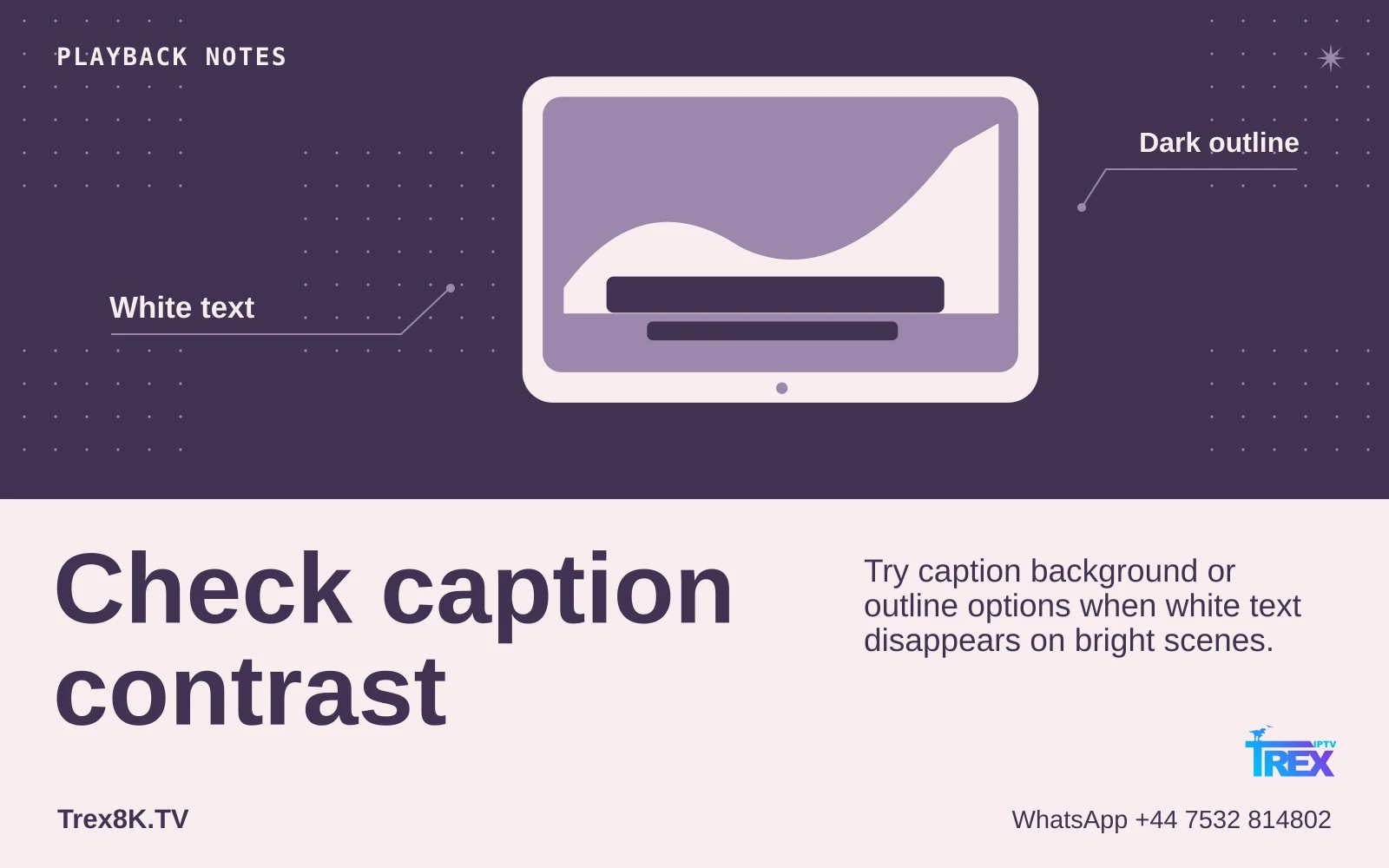
Look at where the text sits in relation to the picture. A line hidden by the television’s zoom, coloured text with poor contrast or captions appearing well after the speaker need different remedies. Check another scene before changing a timing setting. A delay that begins after an advert may be local to that transition, whereas poor legibility may continue through the whole programme.
To report a missing option, give the programme, episode or broadcast edition and whether you watched live or on demand. Say which labels the player did offer. If captions are essential to someone in the household, use the trial to verify a programme they actually watch and the device they will keep. A platform may advertise accessible programming while carrying different options on different editions. Keeping the exact test result makes a much stronger basis for a subscription decision.
A live bulletin and a film can behave differently
Compare caption behaviour within the same kind of programme. An edited film can have a carefully timed text track, while a live bulletin may use captions prepared as the speaker talks. A delay observed in a live interview does not establish the timing of an on-demand episode. Describe the kind of material and whether the words appeared in complete lines or built up as speech continued. If the problem affects only one speaker or one segment, note that boundary too. These details help a viewer explain what assistance was missing without demanding the same presentation from every source.
Questions and answers
What does a caption track add beyond the spoken words?
It can identify speakers and communicate important sounds, music or other audible cues needed to understand the programme. Check the actual track on the intended edition.