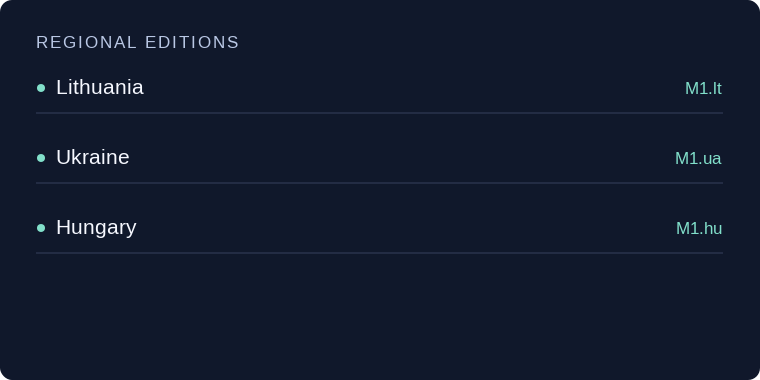
Two records illustrate the naming problem in the M-1 guide. One is M1.lt, filed under Lithuania. Another is M1.ua, filed under Ukraine. A search result can show the same display name for both. The two country fields are the quickest way to separate these particular entries.
The comparison for M-1 brings together 3 entries across 3 source markets. When an app hides the market in a short results list, open the station information. A programme title alongside the identifier will be easier to match with an old schedule than the first result on the remote.
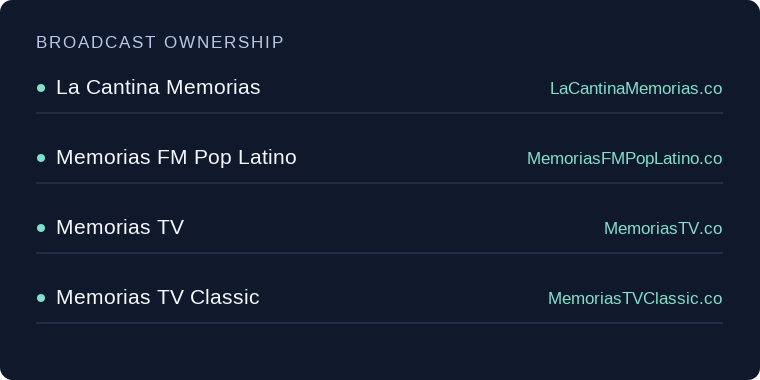
La Cantina Memorias, Memorias FM Pop Latino and Memorias TV appear together when the records are grouped by the owner label Memorias Producciones. The published guide follows 9 individual station records, with 9 assigned to Colombia. That distinction matters if you remember the group name in a programme credit but need the station that actually listed the programme.
The comparison is most helpful as a list of identifying names. A guide saved under Memorias del Corazon can be checked against the Memorias Producciones group, then against the source-market row and the individual reference ID. None of those steps requires guessing the date of an ownership transfer.
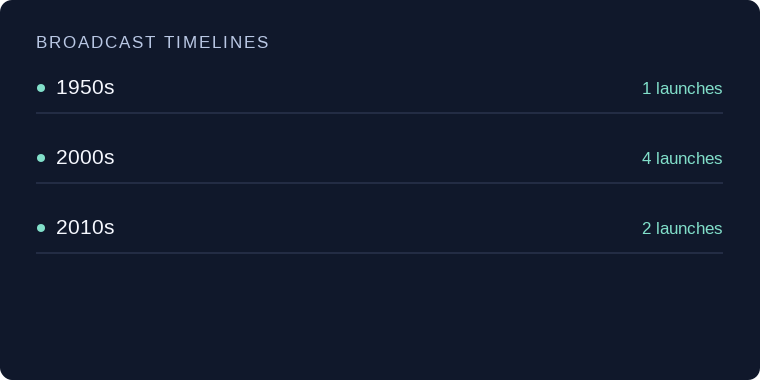
The chronology opens with La Une, dated 31 October 1953. At the other end is ABXplore on 13 September 2017. Reading between the two is a way to place an older service in its broadcast period, particularly when a present-day channel list starts with alphabetical order and hides launch dates.
Of the 7 dated entries in this group, 4 fall in the 2000s. That count follows the specific category and source market named in the article. For a reference to La Une or ABXplore, start with its own row. A concentration of launches in one decade cannot establish the date of a particular programme.
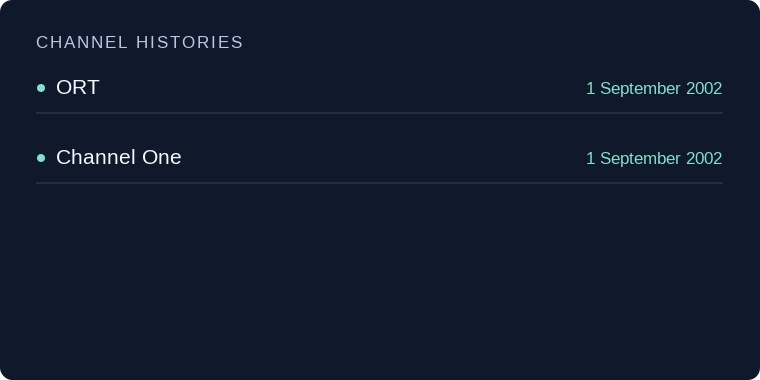
An old guide may still contain ORT. Following its reference to the next station yields Channel One in Russia. The names belong to separate catalogue identifiers, ORT.ru and ChannelOne.ru. Preserve both if you are matching a recording made close to the handover.
The former entry records 1 September 2002 as its closing date. The next entry gives 1 September 2002 as its launch. Those two dates answer a narrower question than “when did the picture change on my TV?” They identify the change documented for ORT and give you two names to try in a historical listing.
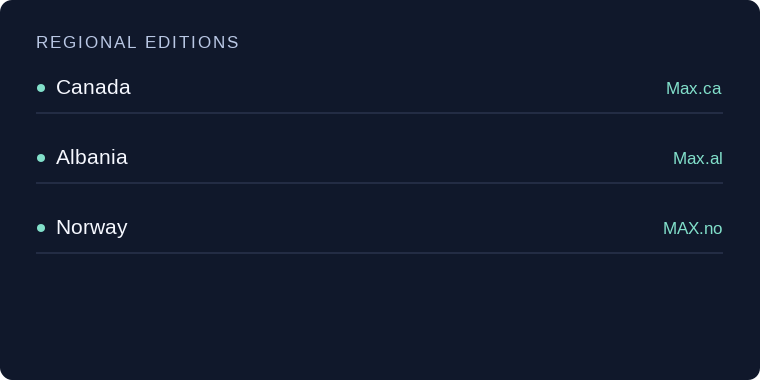
Two records illustrate the naming problem in the Max guide. One is Max.ca, filed under Canada. Another is Max.al, filed under Albania. A search result can show the same display name for both. The two country fields are the quickest way to separate these particular entries.
There is a further search clue in the Albania entry. Its catalogue alias is Film Dy. If that spelling appears on a recording, keep it with the station identifier. There are 3 rows in this comparison across 3 source markets, so a name on its own can leave several plausible matches.
Adult Animation, Australia's Next Top Model and Becker appear together when the records are grouped by the owner label Network Ten All Access Pty Ltd.. The published guide follows 9 individual station records, with 9 assigned to Australia. That distinction matters if you remember the group name in a programme credit but need the station that actually listed the programme.
The comparison is most helpful as a list of identifying names. A guide saved under The Twilight Zone can be checked against the Network Ten All Access Pty Ltd. group, then against the source-market row and the individual reference ID. None of those steps requires guessing the date of an ownership transfer.