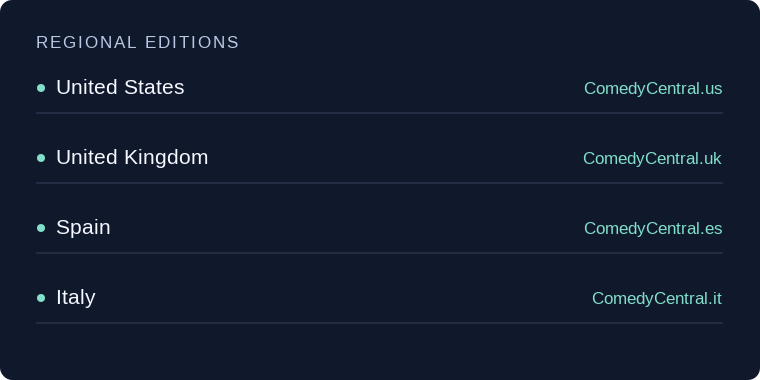
Two records illustrate the naming problem in the Comedy Central guide. One is ComedyCentral.us, filed under United States. Another is ComedyCentral.uk, filed under United Kingdom. A search result can show the same display name for both. The two country fields are the quickest way to separate these particular entries.
There is a further search clue in the Germany entry. Its catalogue alias is Comedy Central Deutschland. If that spelling appears on a recording, keep it with the station identifier. There are 19 rows in this comparison across 19 source markets, so a name on its own can leave several plausible matches.
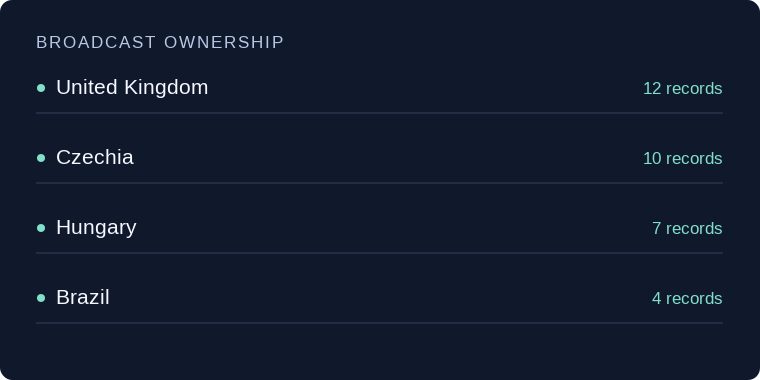
Discovery Channel, Cartoon Network Live and Cartoon Network Live 2 appear together when the records are grouped by the owner label Skydance EMEA. The published guide follows 72 individual station records, with 12 assigned to United Kingdom. That distinction matters if you remember the group name in a programme credit but need the station that actually listed the programme.
The date attached to Discovery Channel is 1 January 1989. The date recorded for Cartoonito CEE is 4 January 2023. They tell you about those stations’ launch records. Use the separate owner field for the association with Skydance EMEA, and the listed market to choose the edition you need.
The chronology opens with HBO, dated 8 November 1972. At the other end is Paramount Network de Pluto on 1 November 2025. Reading between the two is a way to place an older service in its broadcast period, particularly when a present-day channel list starts with alphabetical order and hides launch dates.
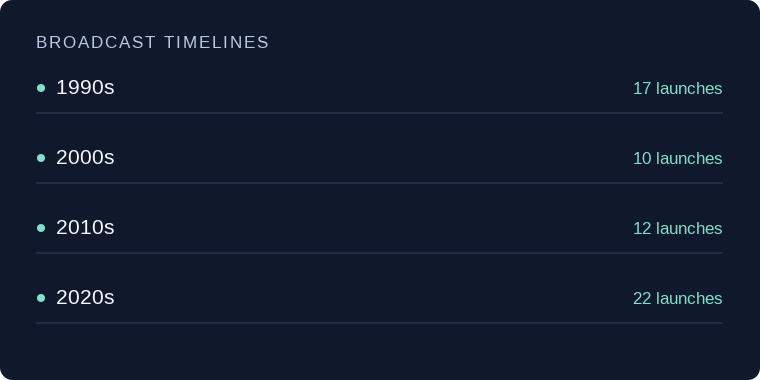
Of the 64 dated entries in this group, 22 fall in the 2020s. That count follows the specific category and source market named in the article. For a reference to HBO or Paramount Network de Pluto, start with its own row. A concentration of launches in one decade cannot establish the date of a particular programme.
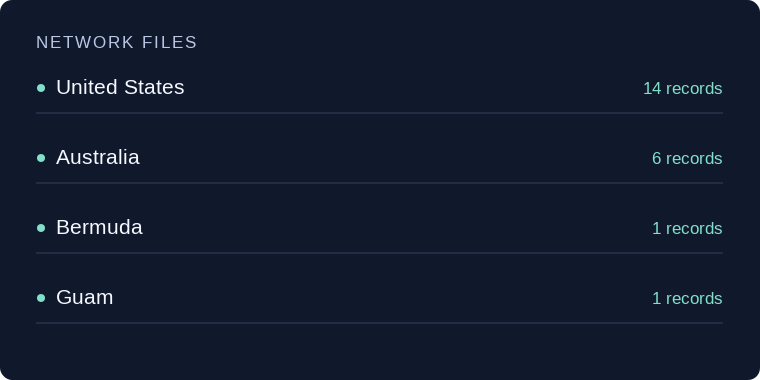
ABC, ABC News and ZFB-TV appear together when the records are grouped by the network label ABC. The published guide follows 24 individual station records, with 14 assigned to United States. That distinction matters if you remember the group name in a programme credit but need the station that actually listed the programme.
The date attached to ABC is 19 April 1948. The date recorded for ABC News Live 9 is 1 March 2018. They tell you about those stations’ launch records. Use the separate network field for the association with ABC, and the listed market to choose the edition you need.
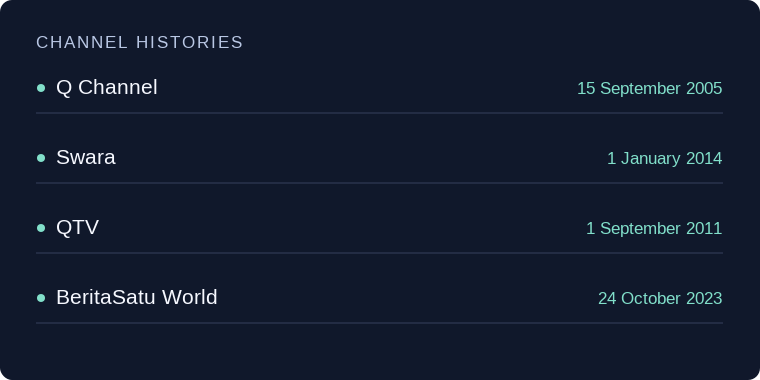
An old guide may still contain Q Channel. Following its reference to the next station yields QTV in Indonesia. The names belong to separate catalogue identifiers, QChannel.id and QTV.id. Preserve both if you are matching a recording made close to the handover.
The former entry records 15 September 2005 as its closing date. The next entry gives 15 September 2005 as its launch. Those two dates answer a narrower question than “when did the picture change on my TV?” They identify the change documented for Q Channel and give you two names to try in a historical listing.
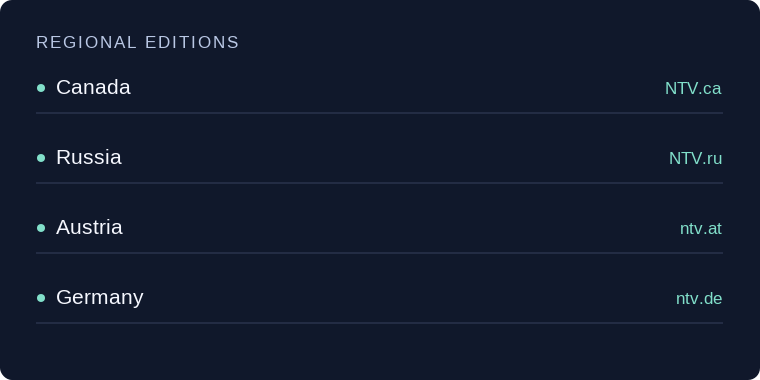
Two records illustrate the naming problem in the NTV guide. One is NTV.ca, filed under Canada. Another is NTV.ru, filed under Russia. A search result can show the same display name for both. The two country fields are the quickest way to separate these particular entries.
There is a further search clue in the Canada entry. Its catalogue alias is CJON-DT. If that spelling appears on a recording, keep it with the station identifier. There are 19 rows in this comparison across 18 source markets, so a name on its own can leave several plausible matches.