
Which Canal C: is in your programme guide?
The directory has 3 separate records carrying the name Canal C: across 3 source markets, including Spain, Argentina, Colombia. A search by the display name alone can return the wrong broadcaster.
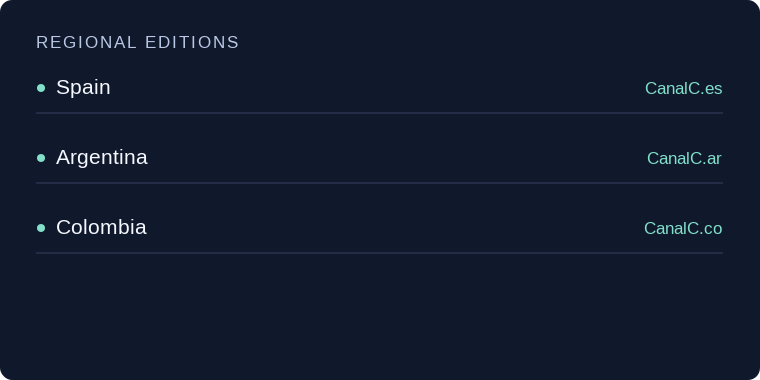
The editions side by side
Which entry matches your screen?
The dated entries include Canal C: (1 January 1997, Spain), Canal C (10 October 2005, Argentina). Use the source market and the station ID to tell these Canal C: entries apart before checking the programme at your local time.
Source edition dated 1 November 2026. Historical station records identify names and relationships. They do not describe a TREX account’s current channel lineup.
A channel can play while its listing is wrong
The channel list, the programme data and the player’s saved favourite can each carry a display name. That allows a service such as Canal C: to play normally even when its guide row comes from somewhere else. In this directory the identity is CanalC.es. The comparison row uses CanalC.co. Treat those as documentation references, because a guide publisher may choose different identifiers for its own data.
First open Canal C: from the complete channel list. Read the current programme line and the one that follows. Now open the old favourite without editing it. If the picture is the same but the grid differs, note both routes and titles. If one route opens Canal C instead, the favourite itself may refer to a different service. These outcomes point to different repairs.
Keep the two results private until you have cropped account and device information from any screen captures. The important part for a guide editor is which label supplied the picture and which supplied the programme row. A clean station example from Spain gives them something they can reproduce without seeing your private account link.
How to separate the results on one screen
Start with the country in which the station is listed. The spelling Canal C: occurs across 3 markets in this comparison. In Spain use CanalC.es. In Argentina use CanalC.ar. The first row has no recorded alternative to Canal C:. For Argentina, the full identifier CanalC.ar is a better second search than guessing a translation. The country attached to a station describes where the record is filed, not which subscriptions include a stream in somebody else’s household.
Does a second name settle it? Of the 3 station rows grouped here, 0 include at least one alternate spelling. Comparing those spellings without regard to letter case gives 0 distinct aliases. For 3 entries, the display name is the only spelling supplied. With two search results on screen, keep the identifier containing the source market and the programme you expected. A logo shared across language editions may supply less information than either of those details.
The programmes behind the display name
Canal C: has no programme category in the station file. One point of comparison is Canal C, filed under general. A general-service schedule can put a bulletin, a match and a film on the same station in one evening. The category on a channel directory describes a broad service rather than any individual programme. For Canal C:, start with the broadcast itself. Write down one programme title and the next item shown in the guide. Two consecutive titles can distinguish a local edition when a cropped logo cannot.
Typing Canal C into a guide can lead to more than one entry. This edition carries the identifier CanalC.co. The catalogue also uses the name for CanalC.ar in Argentina. A player’s search screen can shorten both to identical text. Open the programme details and compare the market field before adding either result to favourites. Keeping both identifiers beside a screenshot makes the mix-up much easier to explain.
An example across the two guide clocks
Suppose two guide entries are due at 20:30 UTC on 15 December 2026. For Canal C:, reading that instant on the clock in Madrid gives 21:30 on 15 December. For Canal C, the clock in Bogota gives 15:30 on 15 December. This is a worked conversion, not a published start time for either broadcaster. Look for the city or time-zone label on a saved listing before assigning it to one of those dates.
The website field on the Canal C record points to canalccali.co. No other station in the packaged snapshot uses that exact recorded web domain. A domain is a useful check on the spelling of a brand. A corporate home page can still lead to several programme schedules. When looking for Canal C in Colombia, carry the station title into the site search and open the relevant regional guide before comparing programme times.